NOTICE: Certain links on this post may earn a commission for Western Hunter Magazine from Amazon or our other affiliate partners when you make a purchase. Thank you for your support.
An Arctic Crucible
By John Barklow
Bowhunting mountain goats in the unforgiving winter environment of Alaska is akin to walking a tightrope over a pool full of sharks while juggling two running chainsaws to reach a pirate’s buried treasure. It’s high-risk, high-reward, with little margin for error. This total commitment was what I craved and was often the price of entry to pursue my desired goals in this harsh arena.
These are hunts where the unrelenting environment can grind you down like a stale cigarette smashed under the pressure of a mountain boot’s heel. Where battling your mind’s internal dialogue is as big a challenge as finding a target animal and getting within range.
I was fortunate to participate in around 30 mountain goat hunts during my time in Alaska, with some occurring during the mild late-summer and early-fall months while helping friends. But the vast majority of my mountain goat hunts were done alone with a bow in hand during the winter months, when the days are short, the goats’ hair is long, and the weather can turn cruel in an instant.
I pursued these magnificent beasts on Kodiak Island and the Chugach mountains while hiking, snowshoeing, skiing, and even ice climbing to reach their lofty perches. Hunting these animals in winter requires tenacity, skill, and courage, along with a sober perspective and mature decision-making on when to push and when to retreat.
My quest often required me to traverse narrow, serrated ridgelines, find sketchy access to small, hanging valleys, and sometimes stare in awe at goats out of reach on impossibly steep, windswept patches of lichen pasted to the side of a mountain. A simple miscalculation or lack of focus could spell tragedy or turn a day hunt into a complete epic.
I’ve fallen down icy slopes and broken both myself and my gear, I’ve had goats that were seemingly dead on their feet from a perfect arrow inexplicably launch themselves off cliffs into the abyss, I’ve been thrown through the air like a rag doll by crazy winds while traversing scree slopes, and I’ve been physically and mentally punished and pushed beyond my preconceived limits.
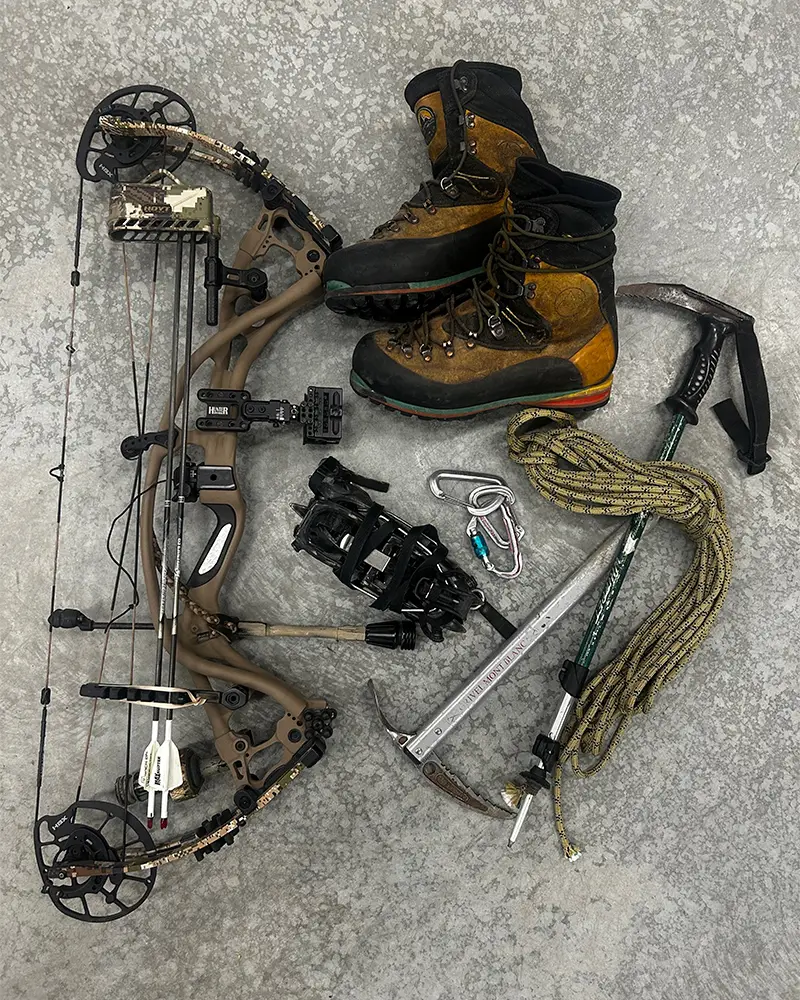
But what kept me coming back to these hunts was the raw adventure and the unconventional approach sometimes required. Anytime you sharpen ice axes, fit crampons to your boots, and have a climbing harness and rope on your packing list, you know you’re crossing over into a realm of mountain hunting that very few will ever experience.
I was fortunate enough to find some success along the way over my twelve years of residency in the Last Frontier, which only encouraged me to continue. But usually, I returned home, licking my wounds and questioning my motivations and sanity for continuing. The last winter mountain goat hunt I went on before moving to the lower 48 was one such outing and a good one for me to finally hang up my overwhites and retire on.
That year, work had taken up a lot of my time, and I didn’t have the chance to pursue mountain goats until the middle of December. By then, many feet of snow blanketed the ground, and high pressure brought clear skies but also unusually cold temperatures down into the single digits. The mountain goat rut was tapering off, but I figured that if I was patient, I could still find a good billy or two hanging on the edge of the herds, searching for a late-estrus nannie. I knew of an obscure area that couldn’t be glassed from any road and required a half-day commitment just to go and investigate, but if the goats were there, I’d have a good chance of a close encounter.
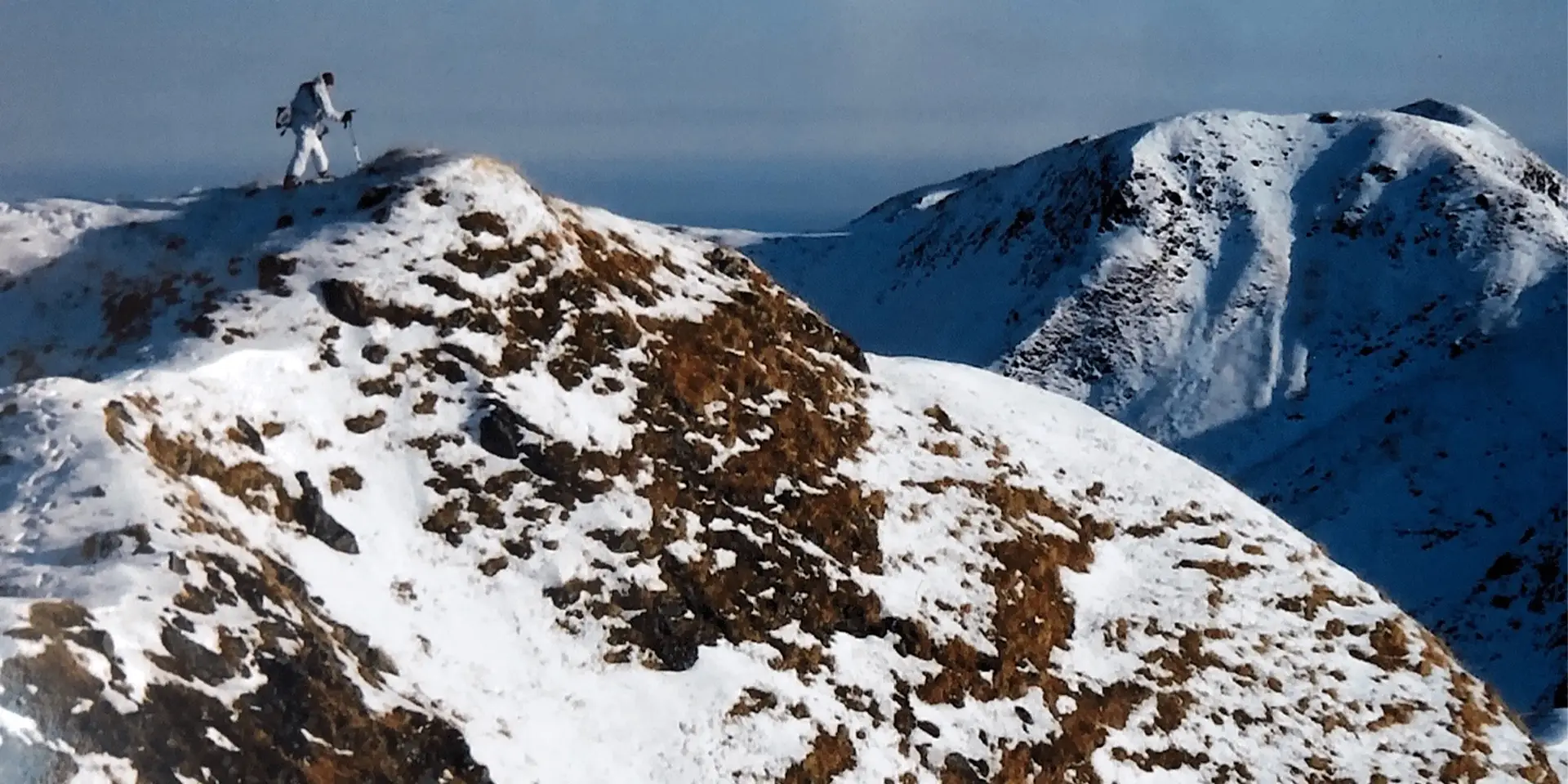
Moving uphill in the dark, the touring bindings and climbing skins on the bottoms of my backcountry skis provided good purchase, allowing me to get into the zone before the first rays of sun popped over the horizon at around 0930. Stashing my skis vertically in the snow so I could find them later, I transitioned into hiking mode and post-holed through knee-deep snow, targeting the edge of a steep, 400-foot-deep gorge several hundred yards away.
Moving silently closer to the rim for a better perspective, I decided to trench into the powder and sit down in a makeshift blind to glass the sparse alder bushes on top. Although mountain goats are white, their color is more dull and a shade off the color of snow, making them relatively easy to spot once you calibrate your eyes. Not five minutes into my recon, I was rewarded with the first movement of mountain goats feeding casually into the sun 200 yards from me.
Thankful for the white painter's suit I wore over my technical clothing and the white athletic tape wrapped around my bow, I simply sat still and observed. Nannies with their furry little kids and several sub-adult males intermingled and foraged, pawing in the deep snow for grass and nibbling at the alder bushes, unaware of my presence.
Twenty minutes later, two battle-hardened woolly monarchs emerged with their flowing chaps, long beards, and dark-staining on their hindquarters from wallowing in rut pits. These were the animals I came looking for, and I would be overjoyed to get a shot at either of them. However, stuck out on an open snow slope with no way to maneuver, I needed to remain patient and let things unfold.
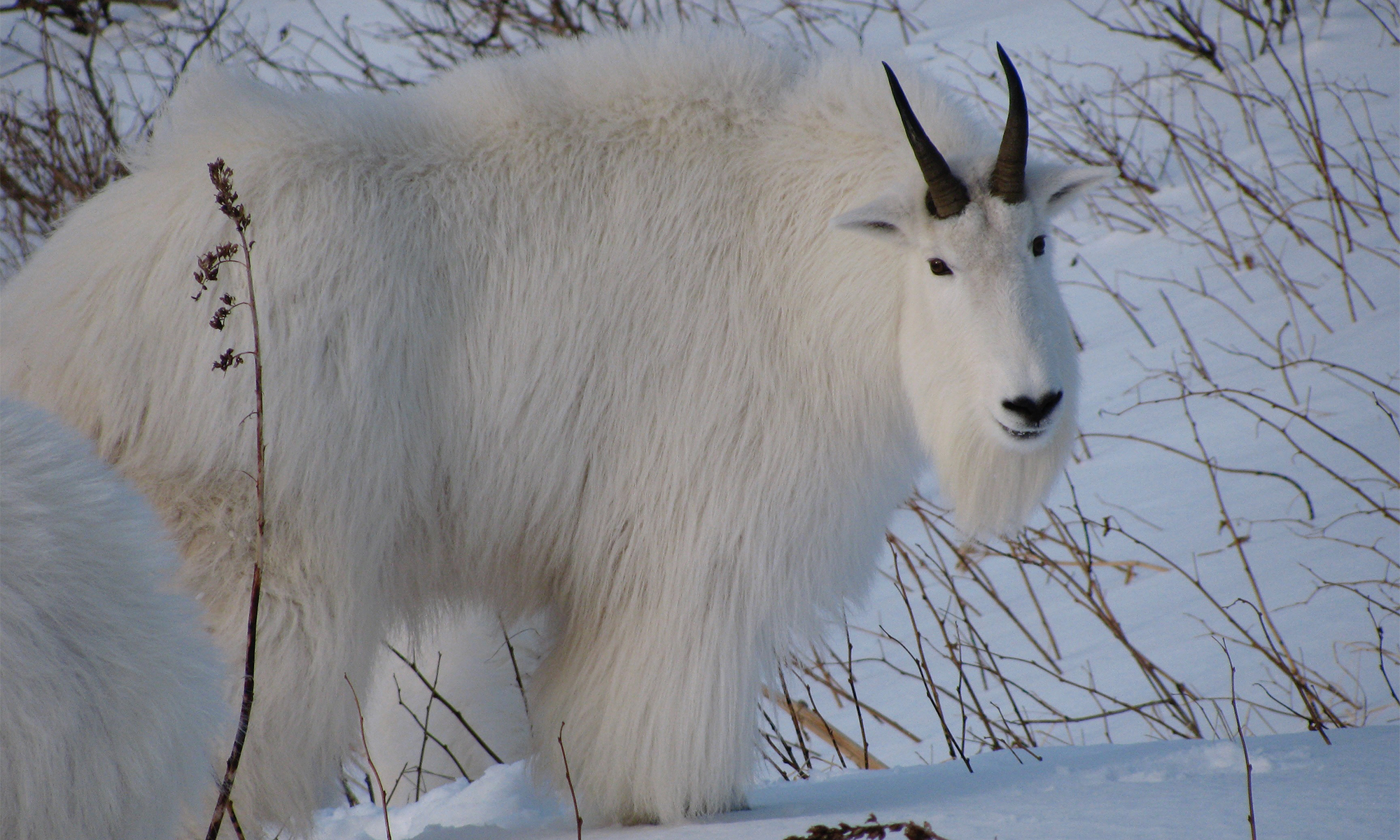
Looking at them through my binos, I noticed a baseball-sized patch of dark blood on the back quarter of one of the billies and thought that maybe he’d been shot previously by a hunter, but after more observation, it became apparent that it was a wound received from jousting. It was incredible to watch the two mature males size each other up and aggressively hook each other in their flanks to establish dominance.
The chaos caused by the two billies continued to stir the herd, allowing me to gradually plow my way downhill, sliding feet first on my butt with my bow across my lap, inching ever closer. Stopping at what I guessed to be about 40 yards, I slowly rose to my knees after nocking an arrow. Luckily, the goats didn’t notice my movement and continued milling around in the sun, seemingly in no hurry, while the cold began to slowly creep deeply into my stiff knees. Getting a couple of range marks off of smaller goats and various alder bushes, I hooked on my release and put tension on the string in anticipation of a shot.
One of the mature males eventually cleared broadside from behind a nanny at 35 yards and buried his head in the snow. Slowly drawing back the bow string, I anchored, went through my well-rehearsed ritual, and pulled through the shot. One second, the goats were there, and the next, all that remained was a large powder cloud of snow and the sound of my heart thumping in my ears.
Standing to stretch and warm up, I couldn’t see anything downslope past the curve of the terrain dropping into the depths. Looking at my watch, I noted the time, then headed back up to my skis and pack to get some food and wait an hour before starting to track.
Anxiously approaching the edge of the gorge, I dropped my ruck and nocked another arrow, unsure of what I was going to find. Remarkably, even after all the animals had frantically run away in the deep snow, I was able to find some blood and follow it downhill for about 30 yards until it became too steep to continue safely without my climbing gear. Strapping my bow to the pack, I donned crampons, extended my self-arrest trekking pole, and grabbed my short ice axe to continue cautiously downward.
Fifty feet further into the ever more dangerous terrain, I lost the blood trail. And that’s when I heard movement and looked across the steep chute to my left to see the herd of mountain goats nervously staring back at me. Frantically throwing up my binoculars, I scanned for the two mature billies but only found the male with dried blood on its flank. Quickly counting their white forms as they began to move away, the herd was one goat short, meaning my goat was somewhere else.
Gaining my situational awareness, I saw where the herd had crossed a steep chute to evade, and just below that was a fresh avalanche scar. I thought through what could have happened and wondered if my goat had fallen and started the slide. If so, then he was likely at the bottom, 400 feet below. Or could he have somehow escaped elsewhere?
At that point, I had two options. I could either go back down the mountain the way I came in and come up from the bottom of the ravine, which would take hours and the rest of the short winter day, or I could continue downward into the void and uncertainty to unravel the mystery.
Choosing to continue into the unknown, I turned into the mountain and began the familiar exercise of down-climbing. Several times, I broke into a cold sweat, questioning my sanity for continuing as the terrain steepened. The deeper I descended into the shaded icebox, the more I contemplated climbing back up and coming in from the bottom the next morning, but the fate of the animal and my hubris kept spurring me on.
About 50 feet from the bottom, I looked over my right shoulder for the salvation of flat ground and saw a large pile of avalanche debris with a small black dot at its apex. Imagining it was an Ermine, a small weasel that turns white in winter but retains its black eyes and nose, I dismissed the thought and finished my descent.
Letting out several sighs of relief and thanking the good Lord upon reaching the bottom safely, I looked to my right at the looming eight-foot-high snow cone of hardened avalanche debris. That’s the counterintuitive thing about avalanche debris; it doesn’t stay soft like the snow it originated from, but hardens under the compression of the snow mass, making it almost as hard as concrete.
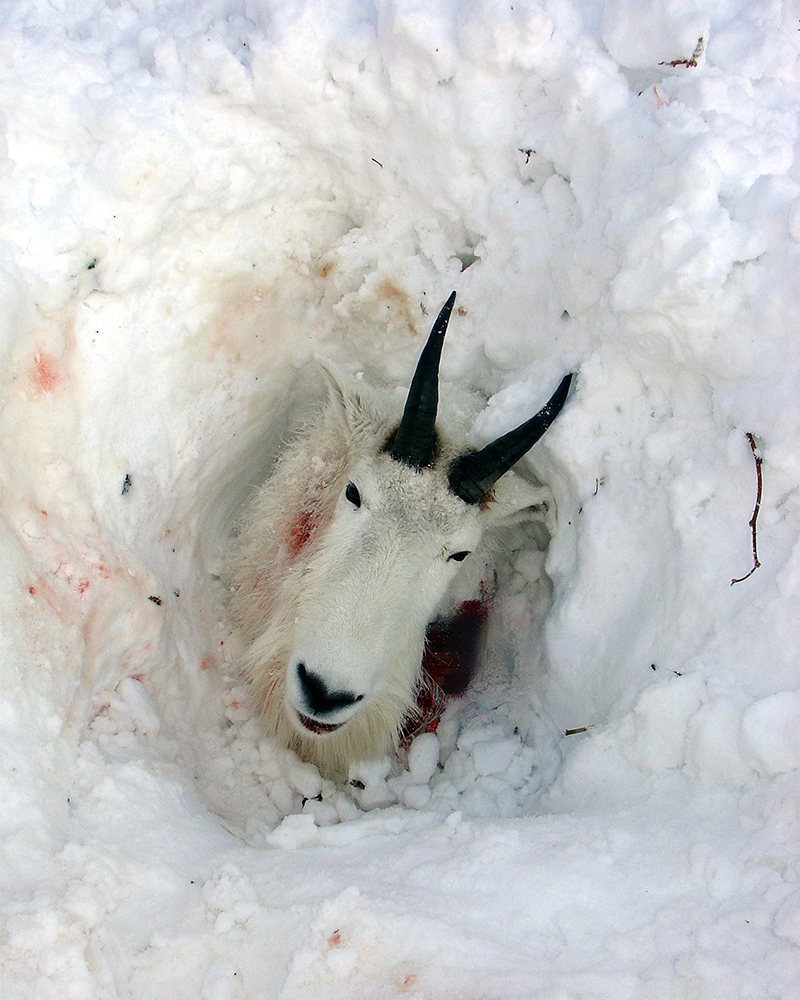
Dropping my pack, I climbed to the top of the debris with trepidation to discover the very tip of a mountain goat's horn protruding from it like a cherry on top of an ice cream sundae. More out of curiosity than excitement, I used my ice axe to trench around the horn to uncover the head of my goat staring blankly back at me.
Elated that I had retrieved the goat, my thoughts immediately shifted to the task of how I was going to excavate him from his icy tomb with the limited tools I had available. I pride myself on being prepared, but even I couldn’t have expected this unique outcome.
Pulling out my flip-phone, I moved around the narrow bottom to try and get a good cell signal, which was spotty on the island, even in the best of circumstances. Reaching my wife after several dropped calls, I let her know I was OK and quickly relayed my situation as to where I was and asked her to please call my hunting buddy to bring snowshoes, small avalanche shovels, and his strong back.
Unfortunately, my poor wife only heard bits of my message, “Goat… dead… help… Aaron…” before the call cut off. Since that trip, I’ve learned my lesson… yet again, to always leave her a detailed pre-trip planning checklist that includes my location, the gear I’m carrying, contact numbers, and an emergency plan in case I don’t return on time. Facing a daunting task and limited daylight, I put the phone away and got to work on the immediate problem of how to extract the goat from the frozen snow above.
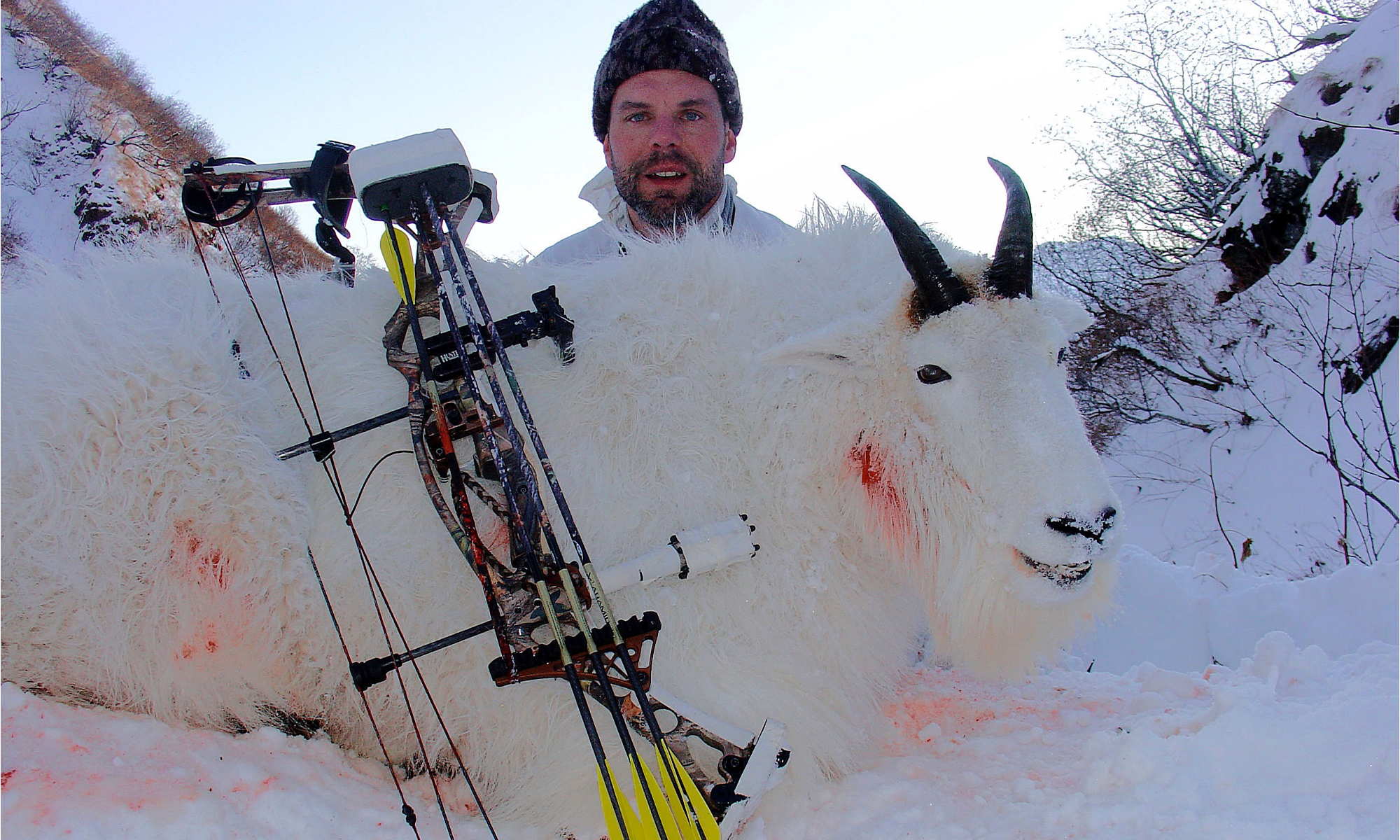
With gloved hands and my ice axe, I slowly hollowed out a hole around the goat, exposing him down to his rear quarters. Then I ridiculously tried to deadlift him out of the hole, but no matter how hard I tried, I couldn't get him to even budge. Then, it occurred to me what a knucklehead I was being, and I simply dug a ramp on one side and slid him down so I could finally take some photos.
This was my best goat to date and a solid Pope and Young contender, so I wanted to take the time and get some photographs for posterity before field dressing. Alaskan law requires you to take all the meat, which is delicious by the way, but I also wanted his long winter cape for a deep shoulder mount. With numbing hands and dwindling daylight, I set to work caping the goat and quartering him up using the gutless method.
Finally taking a few moments to stretch my aching back and get some food and water, I looked up and saw the brightening stars and the faint flicker of greens and reds, as the Aurora Borealis made its presence over the rim of the canyon to the north.
Luckily for me, I’d brought an extra-large pack and gradually slid the now-frozen meat into it, making for a back-breaking load. Lashing the stiffening cape and head awkwardly to the top, I took another break and contemplated the long slog I had ahead of me down the icy boulder and alder-choked canyon. Slipping into the pack’s shoulder straps while sitting in the snow, I was just able to roll onto my hands and knees, but didn’t know if I could stand up. But with the help of a trekking pole and a surge of adrenaline, I eventually grunted my way onto my cold feet.
Looking down the canyon one more time before moving out, I saw what looked like a flash of light. But, being kind of out of it, both physically and mentally, at that point, I dismissed it and started my slog out. But no sooner had I taken a dozen steps than I heard my name echoing off the rock walls of the narrow gorge as my buddy called out.
Apparently, he’d been able to unravel the message my wife conveyed to him and had taken the initiative to head out looking for me. After finding my truck, he'd loaded his pack with food, water, and an extra set of snowshoes to come find me. With smiles on our faces and the coy look of guys who’d shared many crazy adventures, we greeted one another and chuckled at the absurdity of the situation.
Dropping my pack, I gladly put on the snowshoes he’d brought to ease the burden of travel, then, slowly and cautiously, followed my friend along his packed trail. With burning quads and a dehydration headache, I made my way out of the mountains, trying to be present and absorb the entire experience, feeling the blessings of success and a bit of good fortune.