NOTICE: Certain links on this post may earn a commission for Western Hunter Magazine from Amazon or our other affiliate partners when you make a purchase. Thank you for your support.
Nose To Tail: Creative Ways to Use More of Your Wild Game
Notching a big game tag provides us with the wonderful resource of meat, and that is the primary reward that I think of when I head out into the mountains on a hunt. My goal is to have a full freezer by the end of the season that will last me through the year.
After the meat is packed out, there are many other parts of these animals that can be put to use, as well. I get excited thinking about the different ways I can use the animals I am able to take, and this year, I completed a project that I had envisioned for a long time. I took one of my deer hides, some antelope bones, and a bit of wool, and created a one-of-a-kind shawl. The time and effort that went into this project and the sentimental value of the items I used to create it make it priceless to me. This article will shed light on some unique ways to make your harvests produce a plethora of other resources after all the meat is stored away.
Hides
Hides are often preserved for trophies so that animals can be mounted, but even a doe hide is worth preserving and can be useful in many ways. Tanning a hide is a lot of work, but it can be very rewarding. There are many methods for tanning a hide. You can do a brain tan, bark tan, or chemical tan, to name a few. Most animals have large enough brains to use to tan their own hides. Nature always provides. If you will be tanning your hide yourself, then you can also harvest the brain from that animal for that process.
If you are not interested in completing that process yourself, there are tanneries that you can send a fleshed and salted hide to and have them tanned with either the hair on or off, depending on what you want to make from them. Hair-on hides can make beautiful decorations in your home in their simplest form, but many things can be created with them as well. I have recently started having hides from some of my animals tanned and then using them to create old pack board mounts.

I do a European mount on the skull and place it on top of the tanned hide, then I strap it onto an old wooden pack board and hang it on the wall. It is a unique and beautiful way to display a trophy at a far reduced cost compared to getting it traditionally mounted. Fur on hides can also be used to make warm mittens, hats, coats, and gloves. The uses for a tanned hide are limitless. Making them into leather is also a gorgeous and versatile way to use your animal’s hide. I have had many of my deer skins turned into leather. There is something extra special about making something out of your own deer’s skin. Leather can also be used in countless ways. I used one of my deer skins to create the fringe border on my wool shawl.
Bone
Big game animal bones also have a lot of uses. I use them to make bone broth, which is exceptionally nutritious and versatile in the kitchen. I have also used bones for dog treats. I will cut them down so they are in about five-inch pieces and then freeze them in bags. I then have a supply ready to pull from all year long. I recently started using the bones to create bone beads, buttons, and toggles. I boil the bones until they are clean and the grease is cooked out of them. I then let them air dry and stay a natural ivory color, or I bleach them as I would a European mount to make them white. I then look at each bone to determine which ones will work best for buttons, beads, or toggles based on their size and shape.
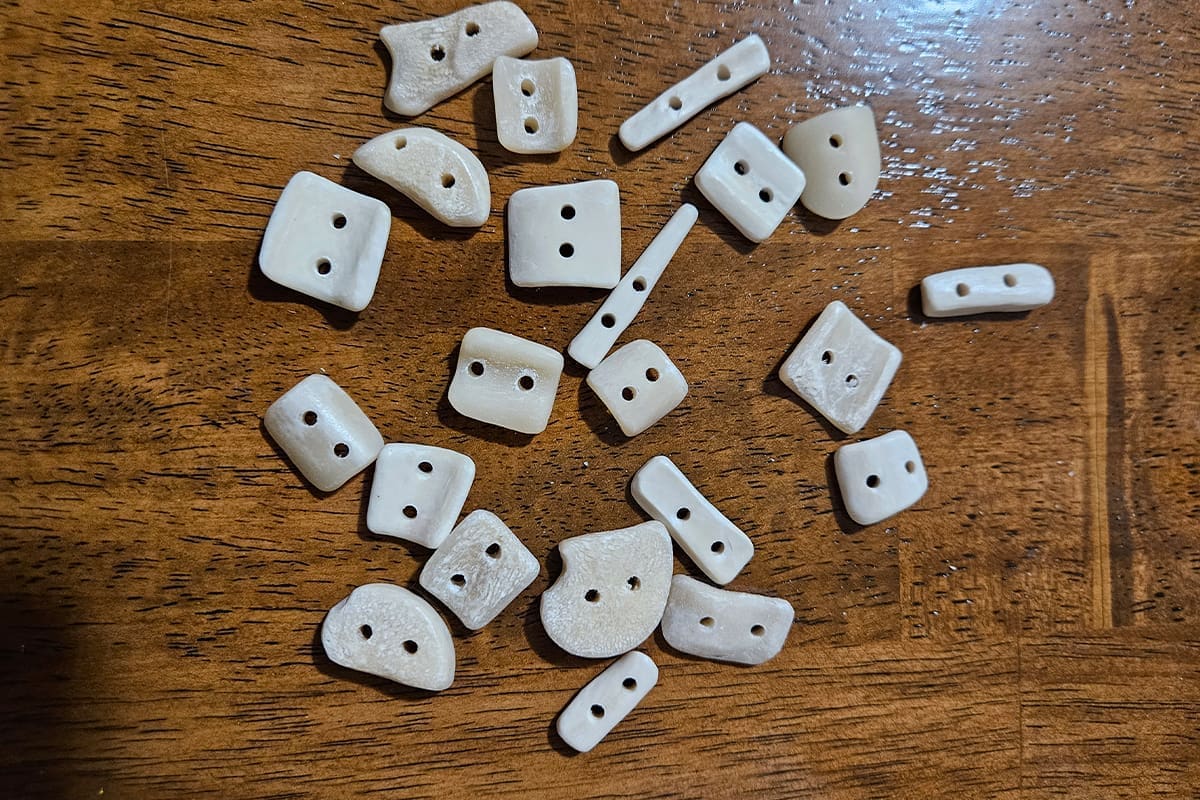
Once I have that vision for the bone in my mind, I use a scroll saw to cut them down to size and a Dremel tool to shape, smooth, and polish them. If needed, I then use my drill press to add the holes for the buttons and toggles. I made a lot of these bone buttons to attach the leather border I made onto the wool shawl that I had crocheted. I also made a pin out of one of my antelope bones from this year that I use to close the shawl and keep it in place.
Scrap Meat and Organs
After I bring meat quarters home and I go through the process of butchering them, there are inevitably some scraps left over. I always take these scraps and portion them into sandwich-sized bags and then freeze them. I take one bag out and feed a little of it to my dogs every day over the course of a week. Adding these pure, lean, raw meats into my dogs’ diet is incredibly healthy for them, not to mention something that they look forward to every day.
Organ meats are full of nutrients and are very beneficial for supplementing your diet. Organs are often not well-received or desired, but can be added subtly to your meals if you prefer not to eat them solo. Grinding the heart, liver, kidneys, etc, as you do with burger and then mixing it throughout your burger is one way to garner the nutritional benefits without having to taste them. You can also dehydrate them in strips as you would jerky, and then grind them into a powder that can be added to capsules. This allows you to take them as a supplement. Buying over-the-counter organ supplements can be quite expensive, especially if you are buying them from organic, grass-fed sources. Nature does this better than anyone, and you have a nice supply of organ supplements at your disposal with every big game animal you take.
Skulls

Almost everyone saves the skulls of their big game trophies if they are getting them mounted or are making a European mount. You can also save the skulls of smaller big game animals that you might not necessarily want to hang on the wall. European mounts of even a doe can be a popular item when embellished with beads or paint. They can be turned into works of art, and I know of a few artists who are always looking for more skulls to create with. The ivory teeth of an elk are always worth preserving, as they are used to make beautiful jewelry, but the regular teeth of these animals can also be repurposed in the same way as the bones and used for beads or buttons. A smaller buck or bull that was taken only for meat can be a great source of antler for art projects, as well. I used the antlers from small bucks to make the cupboard handles in my cabin.
Sharing
Even if some of these uses for wild game are not appealing to you, there is probably someone near you who would love the opportunity to have access to these resources and may not have the ability to procure them on their own. It is a blessing to those people when we simply take the time and effort, during field dressing, to save these elements for those who are able and willing to use them. You may also be able to sell products that you have made using parts of the animals that you have saved and prepared. There are different rules in different states concerning the sale of products made from wild animals, so be sure to check your local regulations before you create anything for sale using your animal.
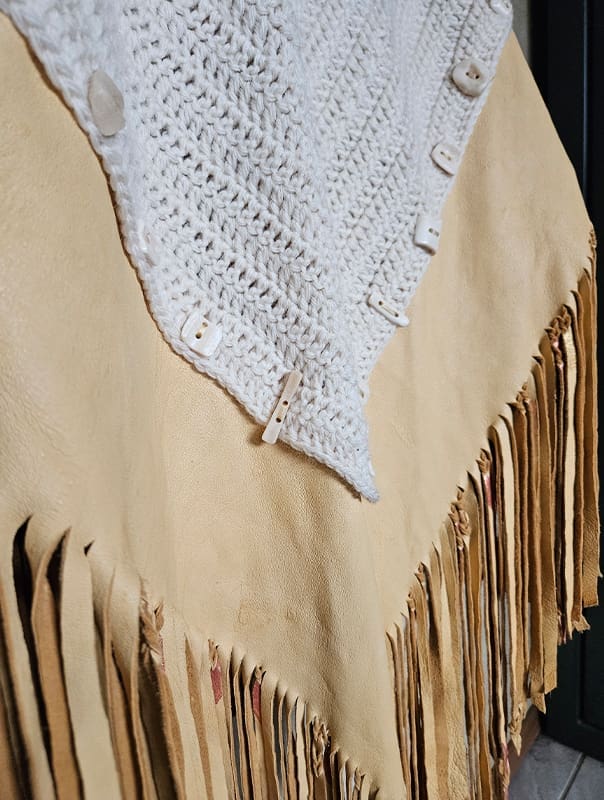
Every single animal that we are blessed to take is a gift. That creature provides immense resources that were fully exploited by our ancestors but have become less appreciated in our culture of abundance. It is easy to just take the meat, the head, and maybe the hide, and those are often all that is required by law. You don’t have to use anything else, but there is something so rewarding about using more of your animal and creating something special with it. The shawl I made this year has so many memories tucked into it and so much work that was required to see it completed.
From hunting the deer that I used for the leather, to skinning it out and getting it tanned, to crocheting the shawl out of wool, to hand cutting all of the fringe, to hunting the antelope, to cleaning the bones and cutting, polishing and drilling them all leading to taking all of these elements and meticulously putting them together to create something I really value, these are the kinds of things our ancestors did every single day. These are the kinds of things that bring depth and appreciation back into our lives. In the days of Amazon Prime, it is incredible to hold something truly hard-earned in your hands that you not only harvested, but also created.