NOTICE: Certain links on this post may earn a commission for Western Hunter Magazine from Amazon or our other affiliate partners when you make a purchase. Thank you for your support.
The Workin' Man's Custom Rifle - Building my dream rifle on a budget
Lately, it seems that there is more and more chatter on forums, social media sites, and in popular hunting publications about the types of firearms that are "acceptable" for modern-day hunters to take into the field. As someone whose life essentially revolves around hunting in one way or another–not to mention working for a high-end optics retailer–I have noticed a trend in an upward direction related to the quality and cost of firearms that seemingly "regular" folks are buying.
It's now common to bump into somebody at the trailhead who is strapping an $8,000 rifle to their pack on the tailgate of a $7,500 truck. I'll admit, seeing such things, I have thought to myself, Am I going in undergunned?
I'm fairly certain the simple answer is no. But what's the deal? Having shot rifles from Gunwerks, Best of the West, Seekins, and dozens of other top-tier custom jobs, I have seen the light. Of course, an ultralight rifle with a buttery bolt cycle is the new American dream, but what about the little guy–the average guy of regular means who can shell out maybe a paycheck or two worth of cash for their whole rig?
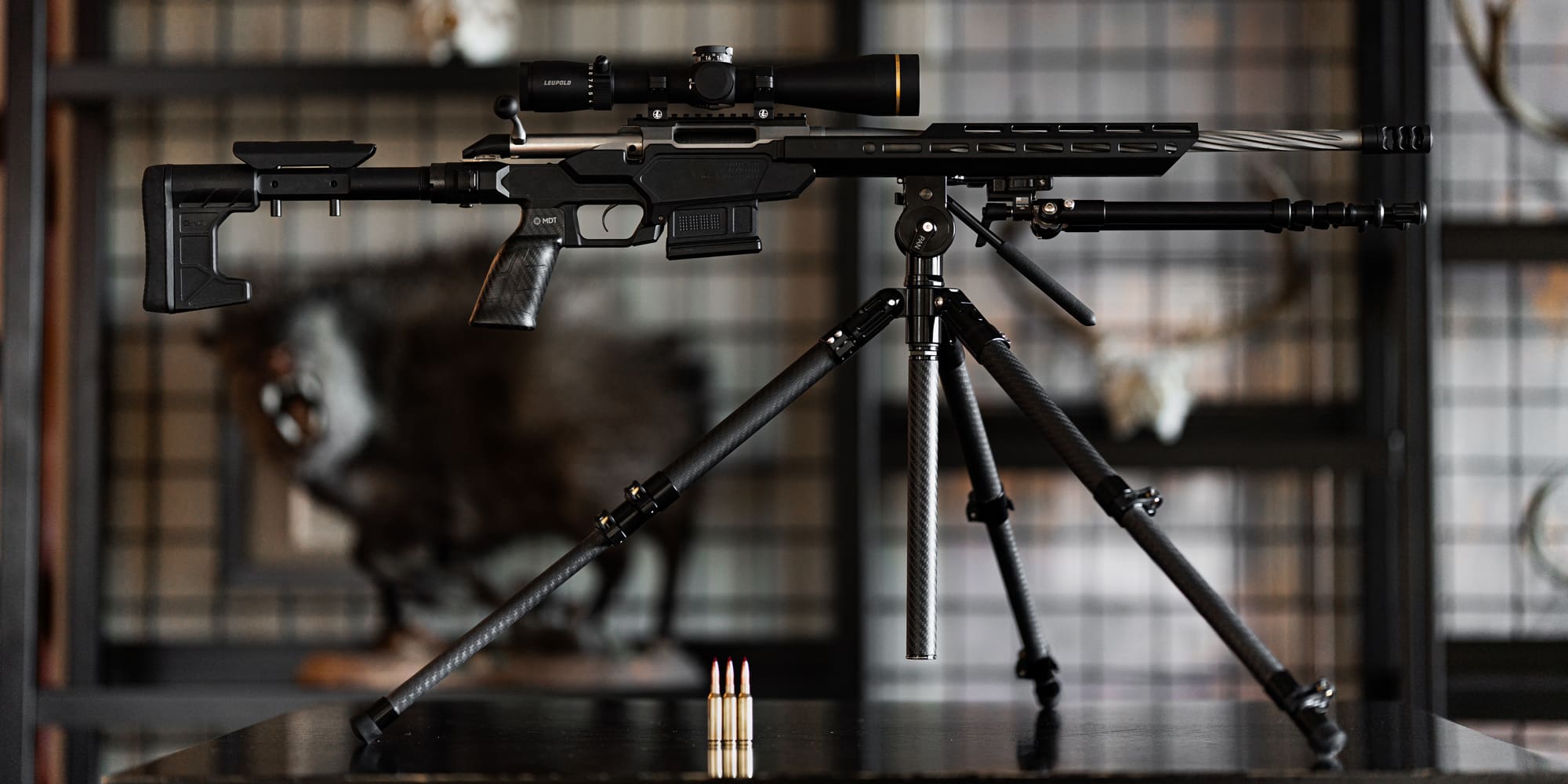
It occurred to me that I am that guy. Thus began the project that we're affectionately calling "The Workin' Man's Custom Rifle." Can we take an off-the-shelf rifle and create something that offers a similar experience to that of a fully custom gun? The main comparison would be Brody's 60% carbon fiber MDT masterpiece from the last issue.
Some Parameters:
The base platform would be something that could be paid for by going out to dinner less often. After a close battle between sub-$600 rifles on my laptop screen, the winner was the Ruger American Gen 2. While many of us have been clambering upward in rifle value, the "AG2" has been dominating, and I mean dominating in sales across the nation. Like the Gen 1 before it, the AG2 is the most popular bolt-action rifle currently on sale. More on that later.
The Project
The idea was to take one of the most accessible rifle platforms available and test how it performed with no modifications. Then, we'd take that same rifle, apply equal parts frugal upgrades and elbow grease, and compare it to the original and our custom example. The budget is around $2,500-$3000, including an optic.
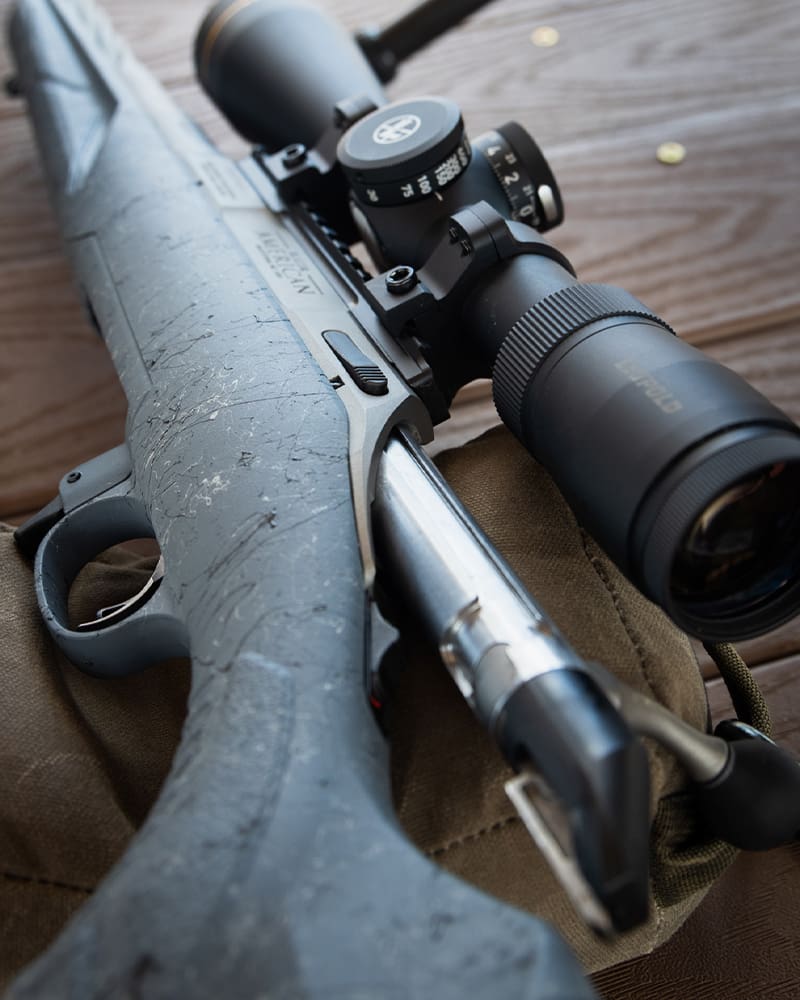
That struck me as a little high at first, but, assuming the optic would be no less than $1,000 and the rifle retails for $599, it's not much of a reach to spend an extra $1,000 over time to achieve a pretty sweet-shooting deer gun. There are a few ways to do this on the ultra-cheap, but the idea here was to make a very good hunting rig. We're still coming out around half the cost of the cheapest "custom" rifle, so I think we're in the sweet spot.
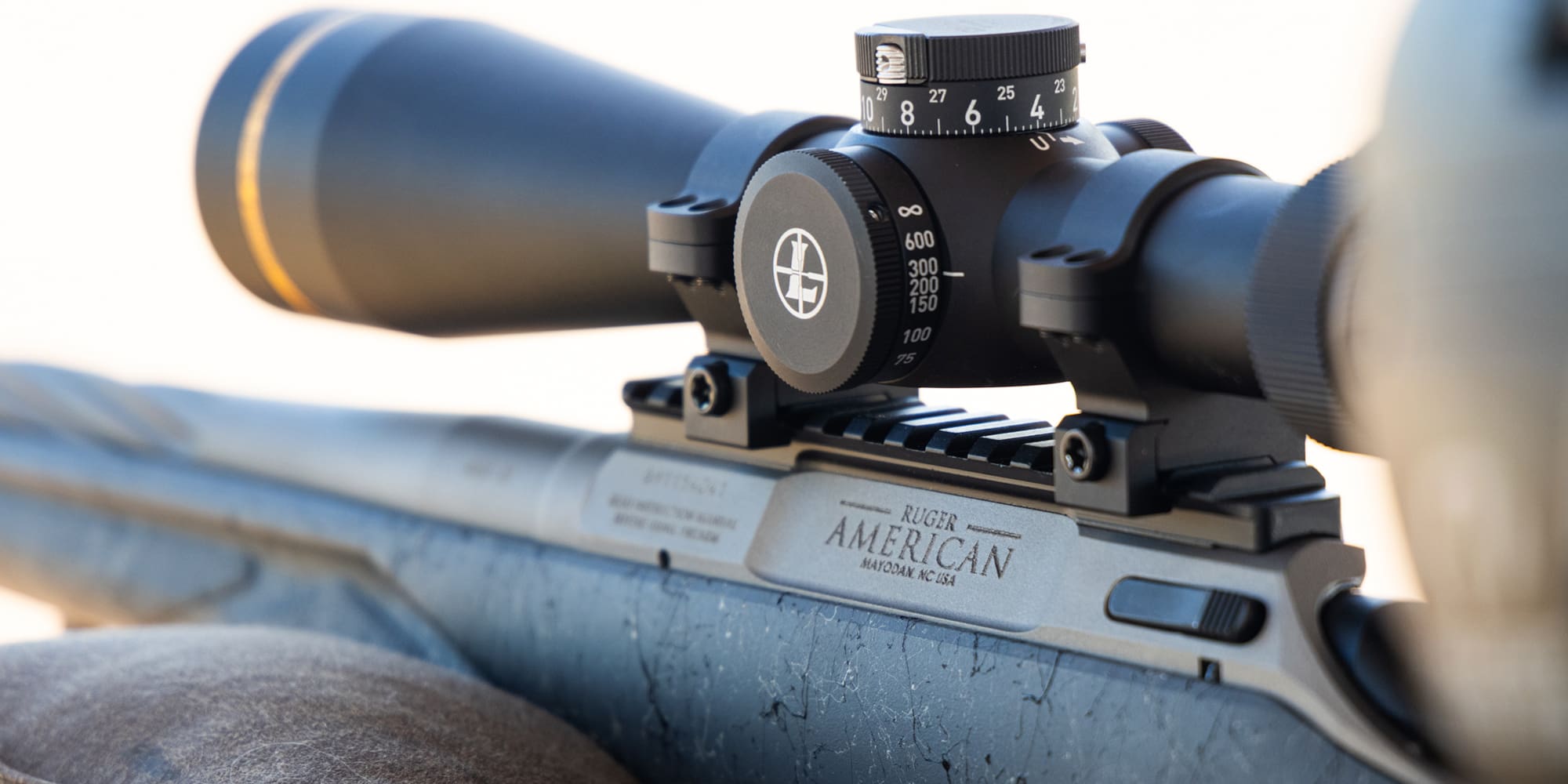
The scope chosen for the build was the new Leupold VX-5HD Gen 2 3-15x44. You may notice, dear reader, that there is a second-generation pattern here. This particular model of VX-5HD Gen 2 is the perfect size, weight, and magnification for this rifle. Lightweight, mountain-proof, and functional. The Gen 2 costs a few hundred dollars more than the Gen 1–$1399.99 compared to $999. If it weren't for the opportunity to use a pre-production Gen 2, I would have opted for the Gen 1 without hesitation. This one is mounted in Leupold Mountain Hunter rings.
Mass-Produced
Ruger has moved an ungodly number of these rifles between Gen 1 and Gen 2. We can't give an exact figure, but if every gun store in America (of which the ATF claims there are around 55,000) had sold 10, that would be 550,000. Most Bass Pro Shops locations have likely sold thousands. That's exponentially more than even the largest custom gun builder. Every single one of these rifles has an owner, and most of those have a YouTube channel. So, if there are issues, they are quickly resolved. This massive production volume is also what allows the American rifles to be procured for around $600.
You can buy this rifle off the shelf at any dealer in your town or the next one over, no matter where you live. That is an important fact to consider when we imagine what a "cheap" gun really is. If Ruger made 5,000 of these, they might cost two or three times more to make. That's getting into high-end, wait-list, backorder territory.
At the Range
With some help from Hornady, we were able to devote an entire day and a fair amount of ammunition to learning the capabilities of the Ruger. The rifle was brand new, off the line, and unmolested, save for a few drops of Rem-oil on the bolt. We were shooting the soon-to-be-legendary 108-grain ELD-M, and the results almost brought this project to a halt.
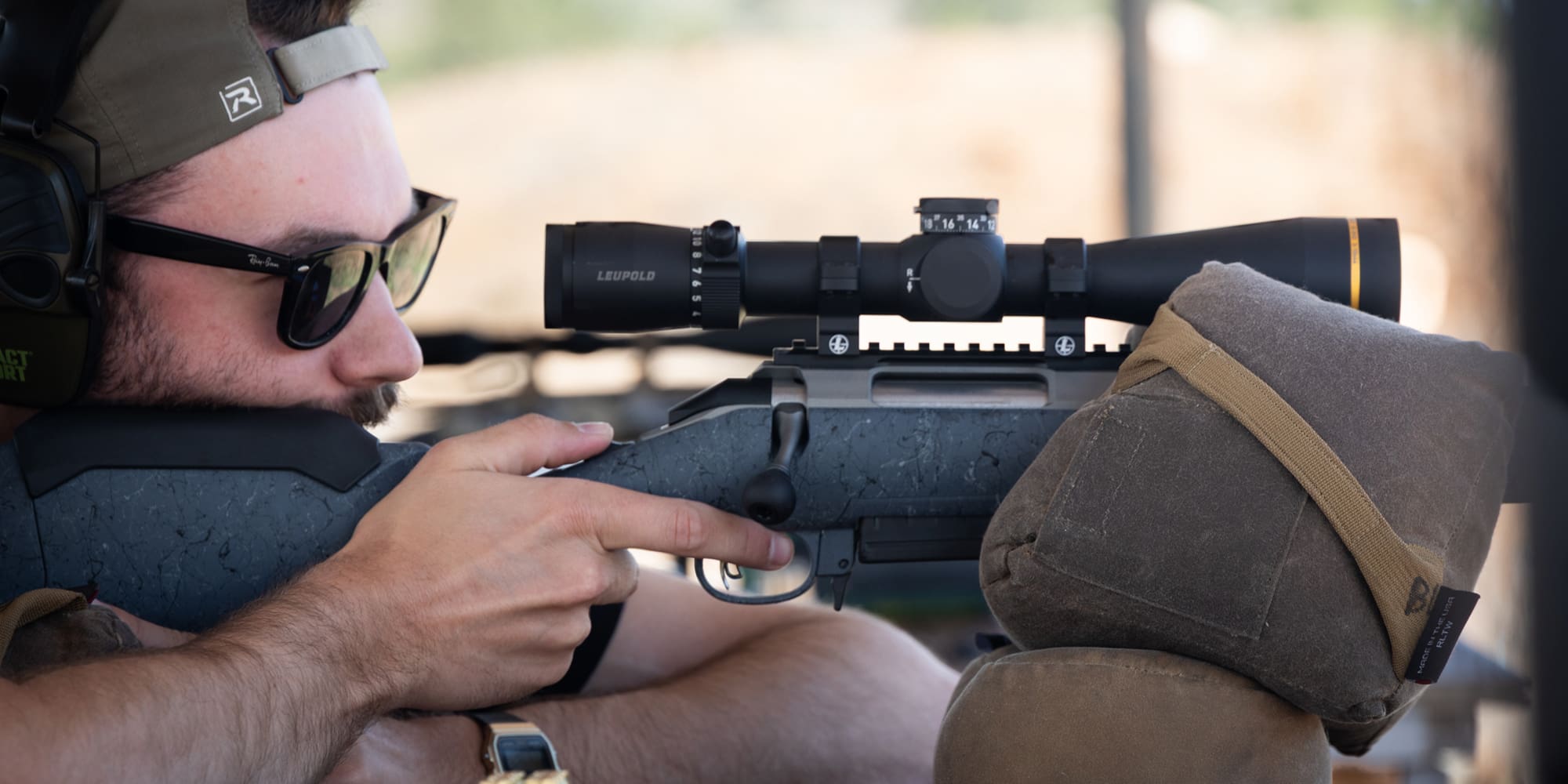
We shot three rounds to hit a Shoot 'n C at 50 yards, then backed it up to 100. I am what Chris would call a "minute shooter." Maybe a minute and a half. I have shot a lot and had some training, but I have not yet found a rifle I can outshoot. Most of us probably haven't.
Our first impressions were miles above expectations. Brody and I each shot groups of 3, 5, and 10 rounds, and the impacts were so neatly clover-leafed that we nearly called off the whole project. Our testing was not extremely scientific, but I can say it was the most accurate I've ever been at the range.
The Ruger has astonished us. It is not without faults, but when it came to hitting targets, it punched like a 250-pounder. It's light, smooth, and consistent. "Barrel break-in" is a somewhat ambiguous concept to me, but for this review, we conducted ourselves like any other guy who purchases a rifle like this. We took it out, shot it, and didn't think too hard about it.
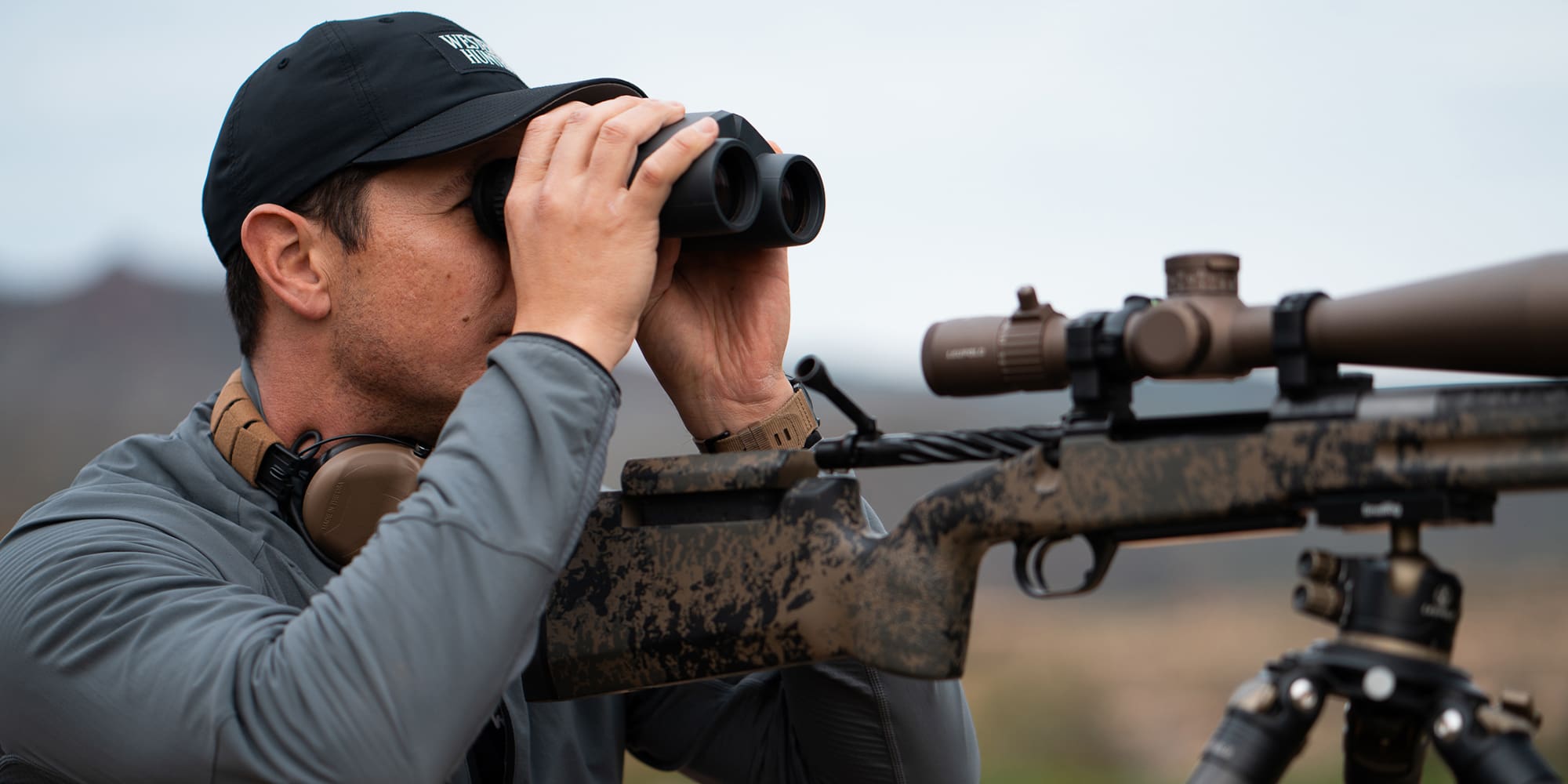
A big factor in the enjoyment of the day was the new Leupold VX-5HD Gen 2. It's as though it was made for this rifle. We were zeroed in about 15 minutes and didn't have to waste any ammo or time. It's also super convenient not to need any tools. It seems like a tiny Allen wrench is no big deal to keep on you–until you forget it. The new SpeedSet system is a simple, elegant solution to an old problem that I'm thrilled to never have again.
The Real Magic
The rifle was a joy to shoot, and the scope was lovely, but the true secret sauce was the cartridge choice. After a healthy office debate on the subject, I went for the 20-inch AG2 in 6mm Creedmoor. Someone floated the idea of 6 ARC, but at the time, it wasn't yet very popular, and I wanted to stick to something more familiar. 6.5 Grendel and even 22-250 were considered but didn't make the cut.
There are wildly varying opinions about what is required or preferred for shots on game of all sizes, but folks like Tyler Freel of Outdoor Life and the boys from Exo Mtn Gear have been casually dispelling most preconceived notions about bullet size vs damage output. I can't personally endorse the 6 Creedmoor as a moose or a brown bear cartridge, but the evidence I've seen has led me to be very confident that this rifle will knock over a Coues deer without question. That's what I will be using it for, and I believe I've hit the jackpot.
Although ballistics and terminal performance are paramount in a hunting rifle, the most important thing that Brody and I discovered while wringing the neck of this Ruger is the pure enjoyment that radiates off of it. Shooting a small, low-recoiling cartridge is not a novel concept in general, but it is to me. I was able to squeeze the trigger, not flinch, and watch nearly every impact that day–and this gun is LIGHT. Scope-on, it weighs 7 lb, 9 oz. Luckily, we didn't bring all of the ammo we had. Otherwise, we might have shot 500 rounds that day.
To me, that forgiveness opened up a whole new dimension of shooting (and shooting accurately). For a target like a deer, it's seemingly a no-brainer for me now. I've decided that complete comfort and confidence in a rifle are my top priorities. The more I like to shoot a rifle, the more I'll shoot it, and that will only improve that confidence. As Caylen Wojcik of Modern Day Sniper recently stated in a video, “No amount of gear is a substitute [for] you being intimately familiar with your rifle." That's my favorite thing about this little grey Ruger. It makes me yearn to shoot it. That may not be the case for you, but the combination of the gun and the cartridge feels like a cheat code to me.
So far, this rifle has far exceeded my expectations, and I'm thrilled with the decision. It feels too good to be true. If you've made it this far, you may be wondering, what's the catch?
Good Question
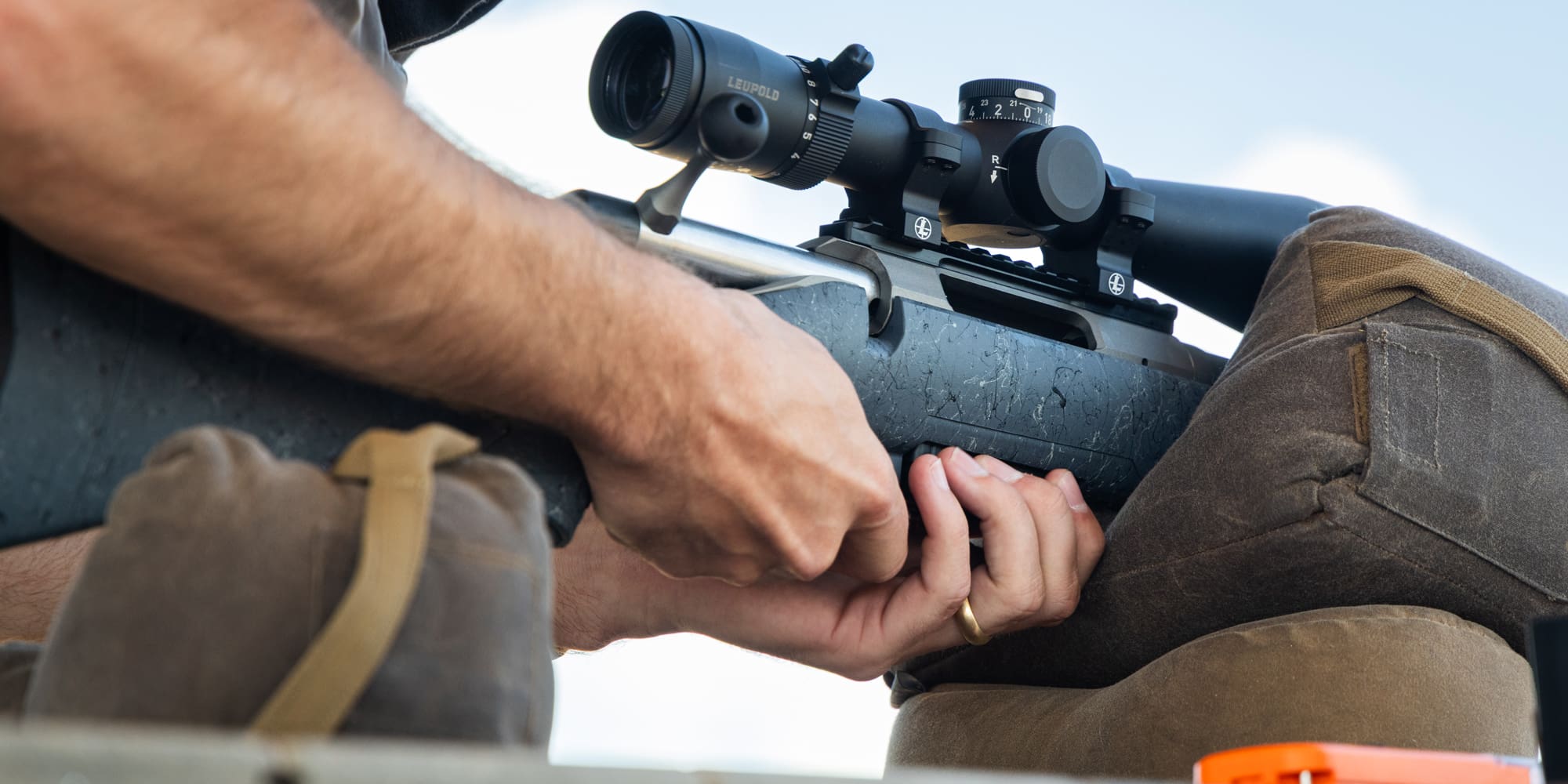
The catch is the catch-22 of the mass production I mentioned earlier. At this scale, a company like Ruger makes small adjustments that add up to ungodly financial repercussions. So, there are places where quality has been very carefully shaved away from the AG2. The first and most noticeable is the magazine. It's a poly AI (Accuracy International)-style unit that, fairly surprisingly, does not quite fit into the magazine well on the stock. It takes some effort and angling to get it to enter the well and some force to get it to seat. That said, it seems to feed reliably when it is in place.
The next few opportunities for improvement are the usual suspects. The trigger could be described as "fine." It features a blade safety mechanism that I cannot wait to discard, but when you squeeze it (pretty hard), it does fire the rifle. The stock is actually better and stiffer than I expected, but it's still fairly low-grade in a world of carbon fiber art pieces.
Although it's not perfect, it's not bad enough to require a change, by any means. Again, it doesn't seem to detract from the performance of the rifle, and it looks good enough that most people around our office have commented on it. The spiral-fluted barrel, Cerakote finish, and funky cheek piece add to its intrigue.
We've Planned for That
The great news is that we have already sourced some very exciting upgrades that will eradicate any of those small knocks on the AG2. The next time you see this Ruger, it will look very different. We're not expecting it to get much more mechanically accurate, but it will be even more of a pleasure both to operate and to carry. Making a rifle more comfortable to shoot generally helps with the accuracy of the shooter, too.
The Upgrade Package
One of the coolest things about the American line is that there is a healthy amount of aftermarket support for these rifles, and I plan to take advantage of that. The upgrade components I have on hand currently add up to about $800-$1,000. I'll list them here and share my experience with them in the next issue once I've had a good amount of time to evaluate the results.
Sharps Bros Heatseeker Chassis
Timney Ruger American Trigger
Outdoorsmans/Salmon River Solutions Muzzle Brake
MDT Carbine Composite Stock
MDT Carbon Fiber Pistol Grip