NOTICE: Certain links on this post may earn a commission for Western Hunter Magazine from Amazon or our other affiliate partners when you make a purchase. Thank you for your support.
Leupold BX-6 Range HD Review
When Shawn Skipper at Leupold reached out to see if I’d like to do some early testing of a new rangefinding binocular they were preparing to release, I jumped at the chance. He gave me a quick overview of the standout features and told me to put it through the paces. That’s exactly what I intended to do over the next several months, with hunts for elk, Coues deer, and wild pigs on the books, not to mention countless days on the range in between.
A few days later, a box arrived with the new BX-6 Range HD inside, and off I went to get familiar with the binos and the Leupold app, and program them with my rifles and ballistic profiles. The learning curve for setup was short, and my appreciation for the system was off to a strong start. The opinions that follow were formed over months of use, on hunts and at the range, before some things within the app and the binos were fine-tuned.
Sure, this is a product review, or at least the first installment of one. To be honest, though, somewhere along the way, this stopped being a test unit and just became my binocular. There are many features I’ve really grown fond of, and some that I still need more time with. Let me share those with you.
Hardware & Ergonomics
If the Leupold BX-6 Range HD were a fighter, you wouldn’t be looking at a featherweight like Conor McGregor. You’d be looking at a powerhouse like Jon Jones–big, durable, dynamic, yet still light enough to be fast and dangerous.
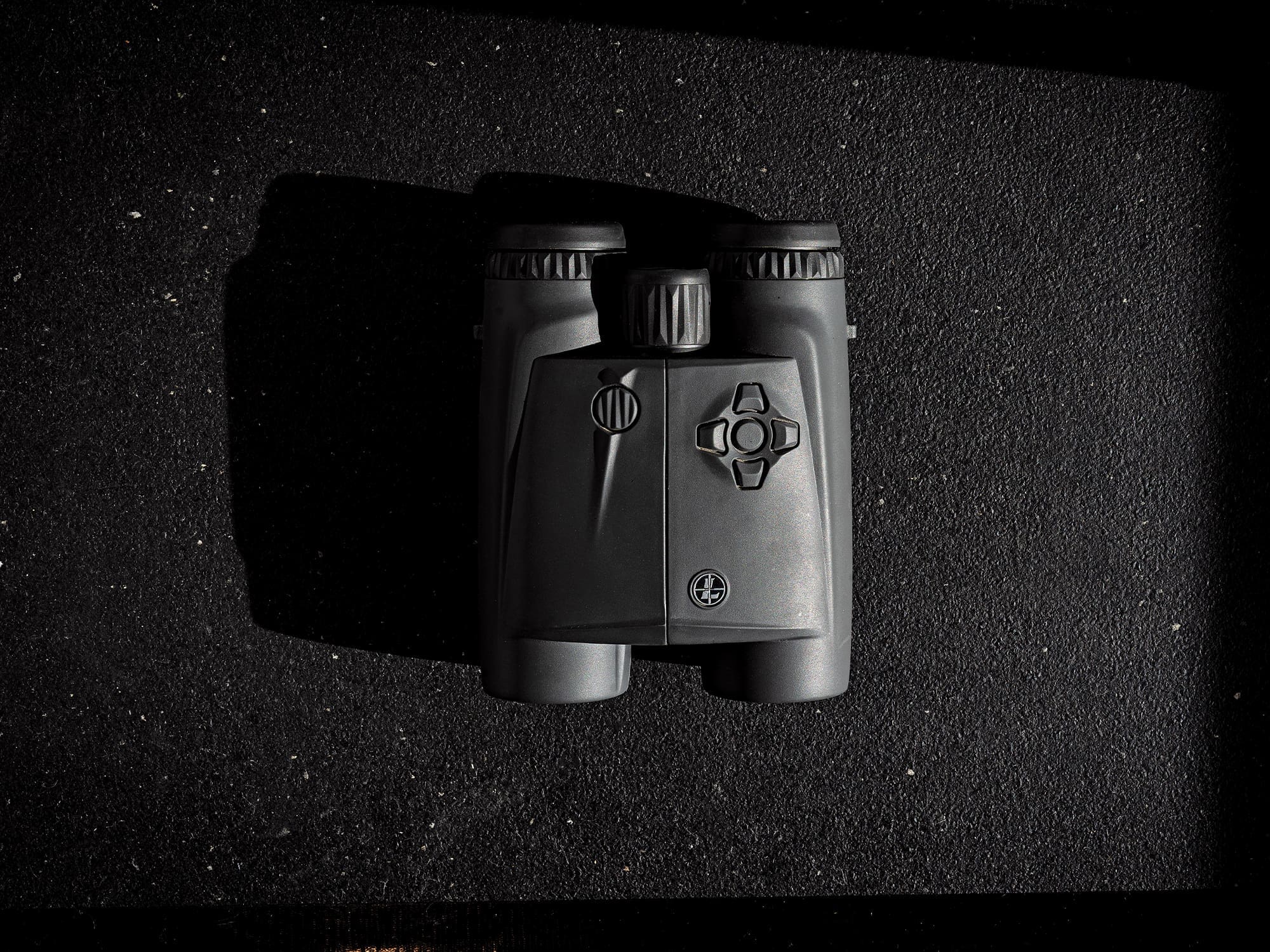
Personally, I don’t need my optics, especially rangefinding binoculars, to be the ultralight items in my kit. They serve an advanced, specific, and technical purpose, and I’m not interested in sacrificing performance just to shave an ounce or two. That’s not to say the BX-6 is overbuilt or bulky. It isn’t. These binos strike an excellent balance between weight, durability, and ergonomics.
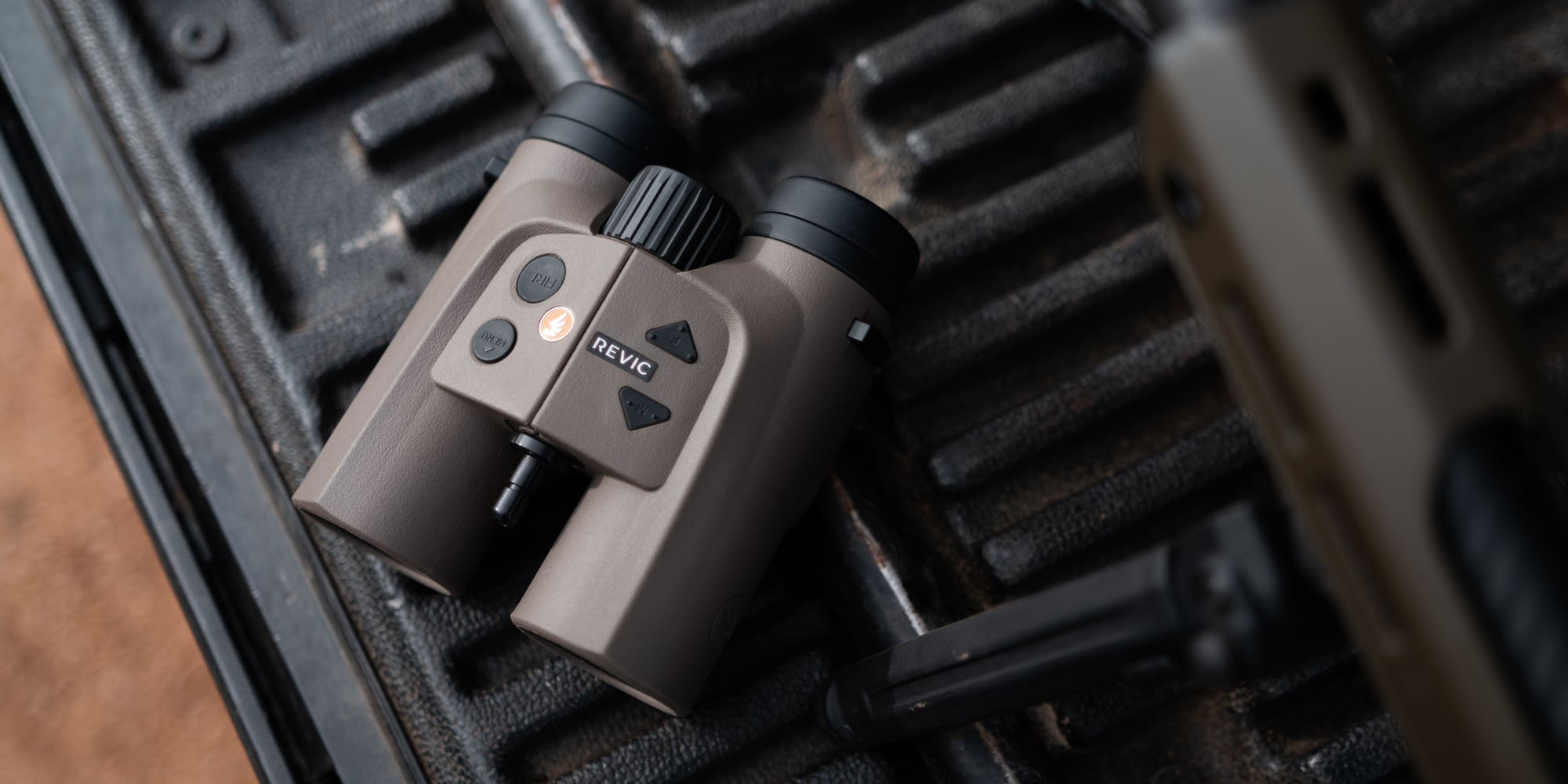
One small but meaningful detail is the placement and feel of the ranging and windage buttons. They’re textured and raised just enough that there’s no guessing or searching. That doesn’t seem like a big deal when you’re standing in your house, but when there’s pressure, like a Coues deer heading over the mountain or a clock running at a match, your brain doesn’t need an extra step to find the right input.
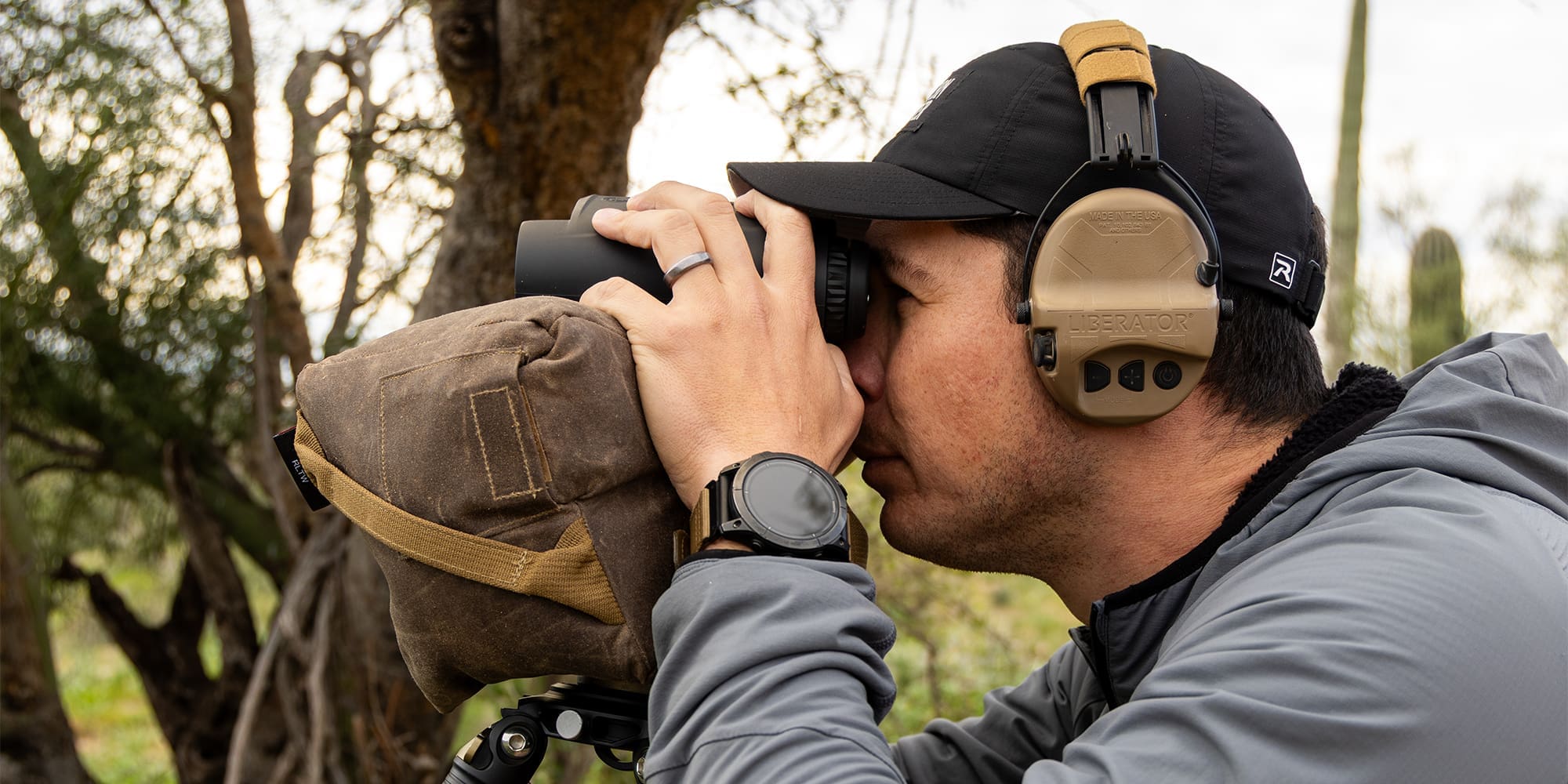
The standard eyecups installed from the factory are perfect for me. Fit is highly personal, and Leupold includes several interchangeable, form-fit eyecups so just about anyone can dial in their ideal setup.
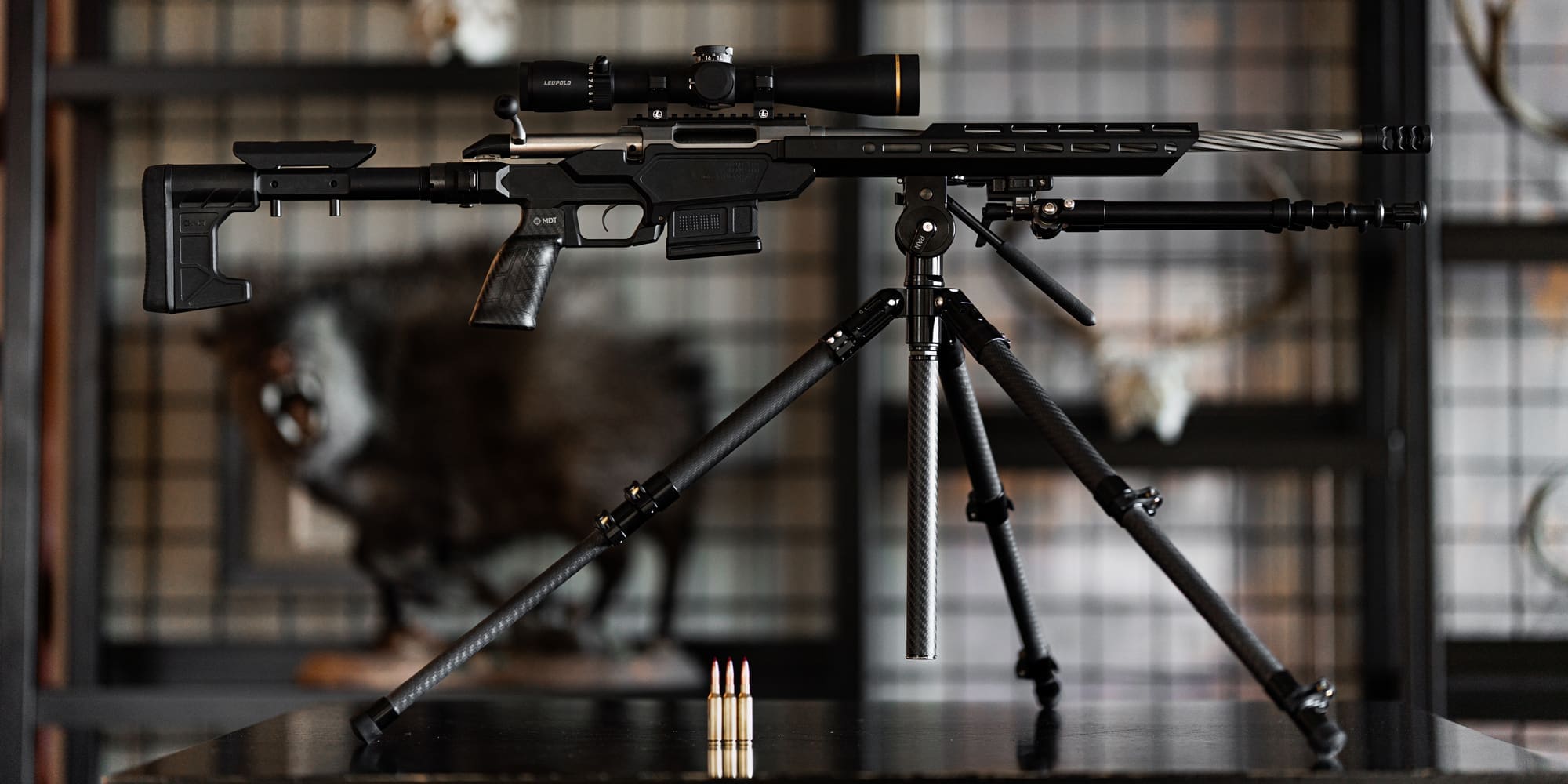
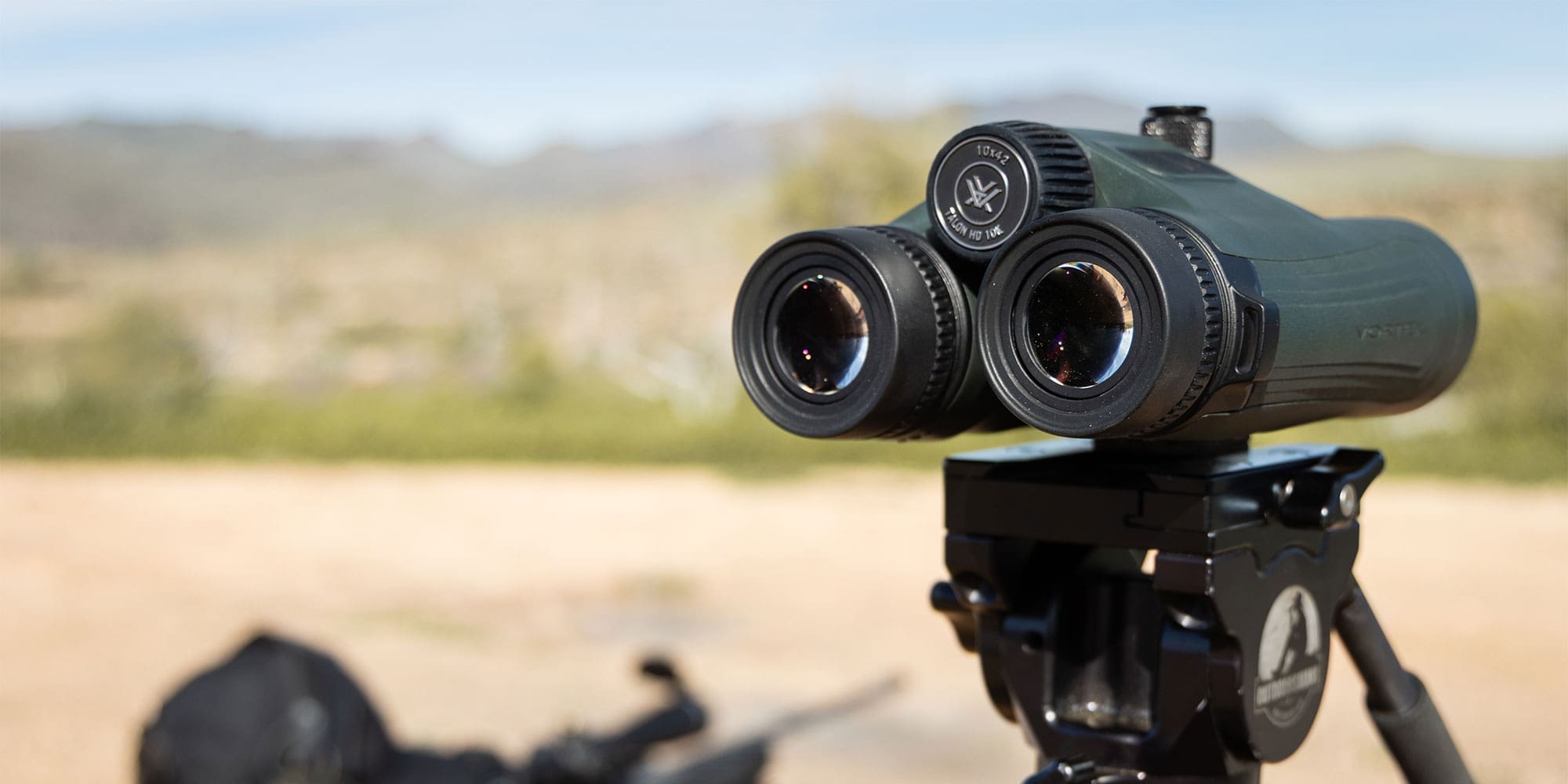
One thing I noticed immediately was that, because of the laser placement and hinge design, I wouldn’t be able to install a traditional stud to mount these to a tripod using my Outdoorsmans binocular adapter. Fortunately, Leupold will be including a tripod adapter with an Arca-Swiss base plate; a smart and critical inclusion for accurate ranging on extended targets.
Ballistic Calculator & App Performance
Part of what excited me most about this system is that the BX-6 Range HD is the first rangefinding binocular to use Hornady’s 4DOF solver as its ballistic engine. Over the years, I’ve had the most consistent success with Hornady’s 4DOF. For NRL Hunter matches and most hunts, I’m also shooting Hornady bullets, which benefit from the most accurate Doppler data available in the 4DOF ecosystem. Having my bullets and solver all speaking the same language matters.
The Leupold Control App is refreshingly simple and intuitive. One frustration I’ve had with nearly every other ballistic app is how cryptic and buried critical profile inputs can be. In contrast, I’ve now built profiles for multiple rifles and a wide range of bullets, and the process is straightforward. Creating, editing, and switching between profiles is fast and logical.
In testing seven different cartridges, three of them using non-Hornady bullets without native 4DOF profiles, I saw exceptionally accurate solutions out to 1,100 yards. I even stretched a 7 PRC to 1,530 yards. At that distance, wind discipline becomes the dominant variable, and precision matters at a completely different level. More on the wind features of this bino shortly.
Glass, Laser, and Reticle
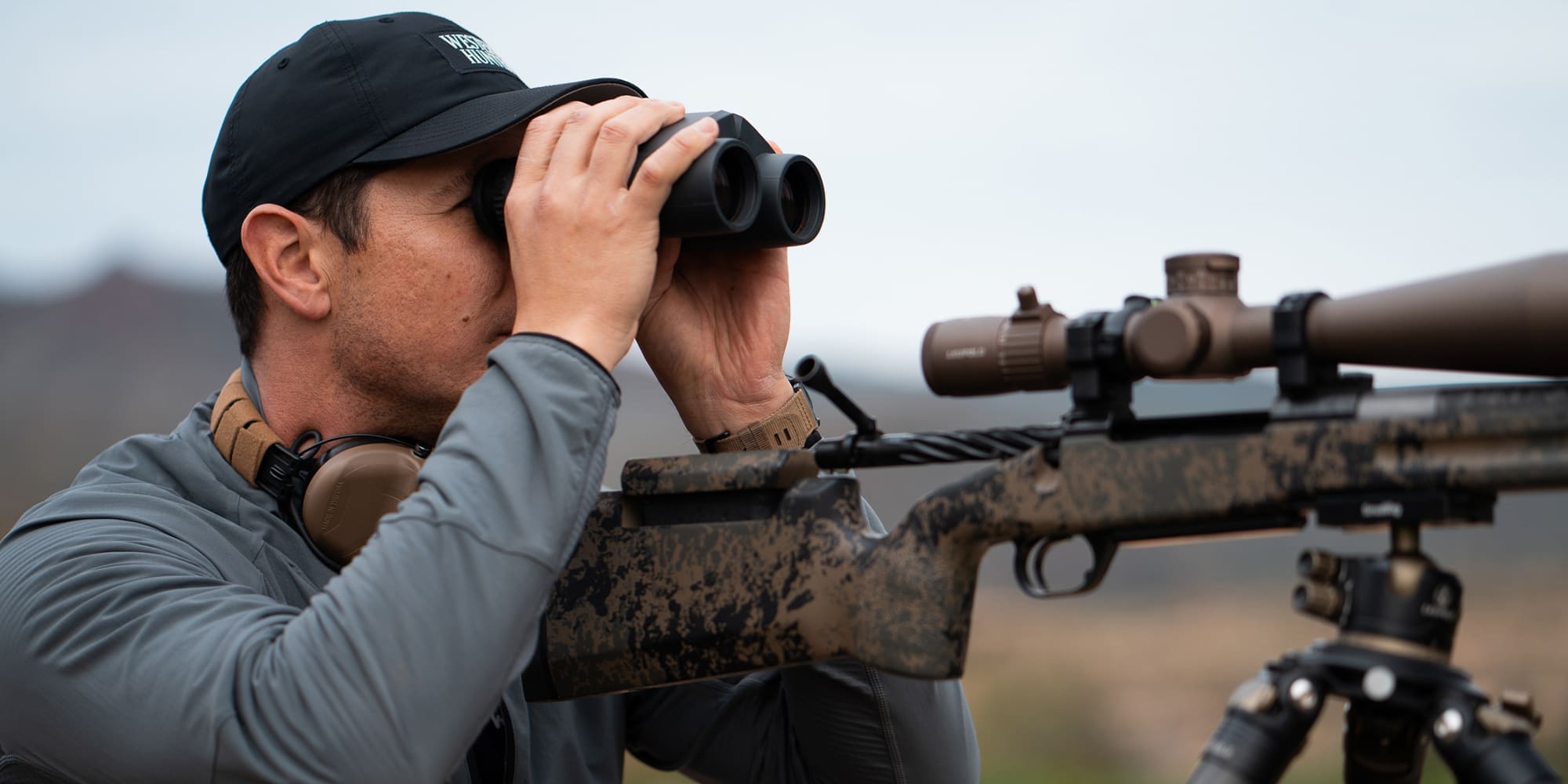
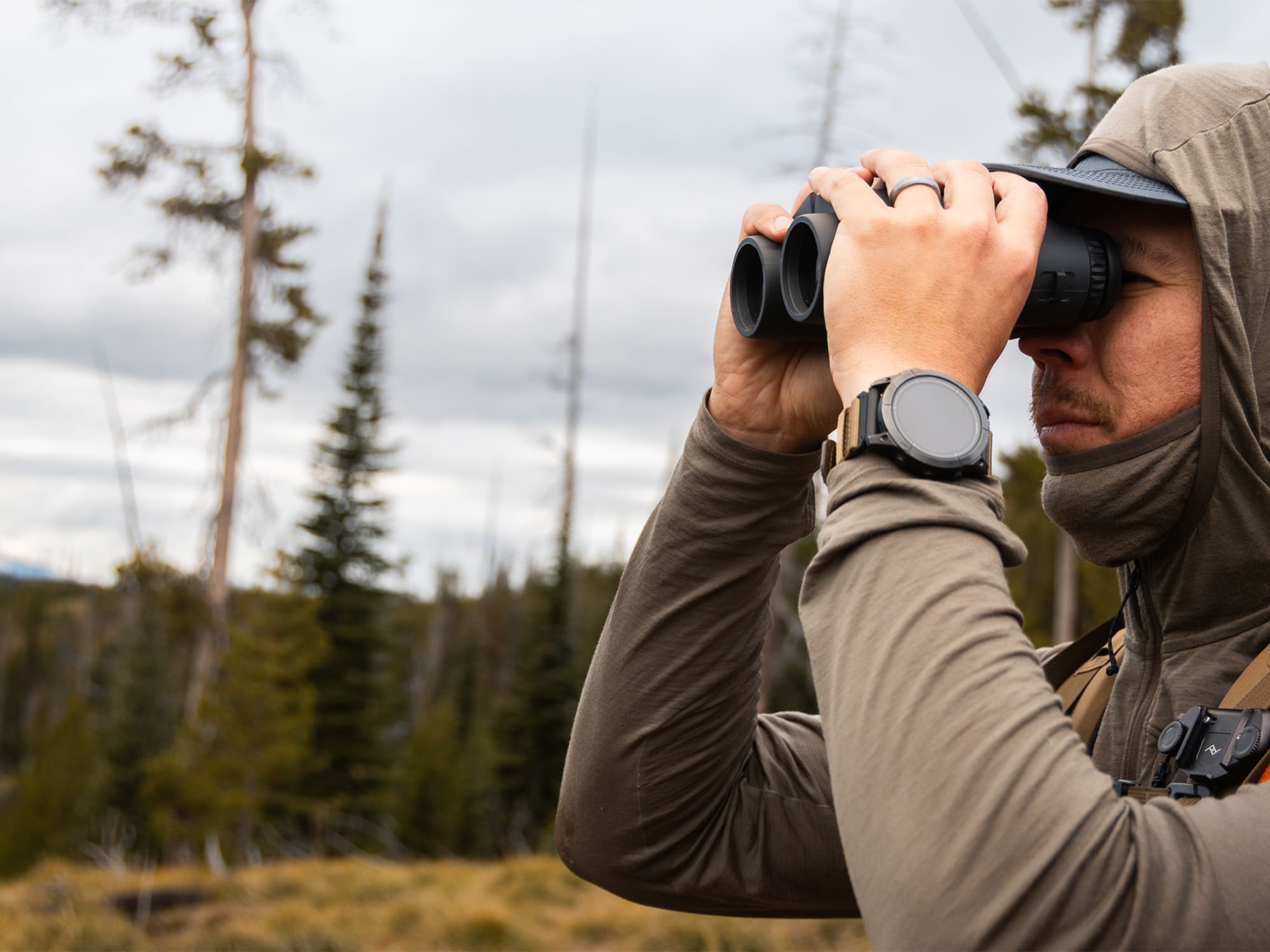
There’s a lot to be impressed with in the app, the 4DOF engine, and the feel of the BX-6. The secondary stars of this show enter the stage as soon as you get your eyes in the glass. One of the most significant standout qualities of the BX-6 is how enjoyable it is to glass through. It’s often the case that rangefinding binoculars need to sacrifice some level of observation performance to accommodate a unique prism system and different lens coatings. I have been very hard-pressed to find those sacrifices with the BX-6. Even while mounted on a tripod, I have been very impressed with the edge-to-edge clarity, light transmission, and resolution of color and detail in the image. Bottom line, a guy isn’t getting hurt if he chooses to use these as his primary binoculars on a hunt.
The second and third comments I’ve heard from everyone who's used these with me are, “Man, I love that reticle,” and “Holy smokes, that’s a fast laser.” The reticle I opted for, of which there are three to choose from, is the Cross with Point Reticle. I really liked the precision feel of the point that reticle gives me, and with the countless targets I’ve ranged so far, it seems the laser is as true to that point as I could expect.
The speed of the laser is really only something I note because it does seem to improve your experience with the unit, even if the speed difference between it and other rangefinders is minute. Considering what’s happening every time you press that range button, how far a laser travels to an object, how far it has to then return to your binocular, and then the calculations required to interpret that time, it’s a champagne problem to focus on this detail.
Wind
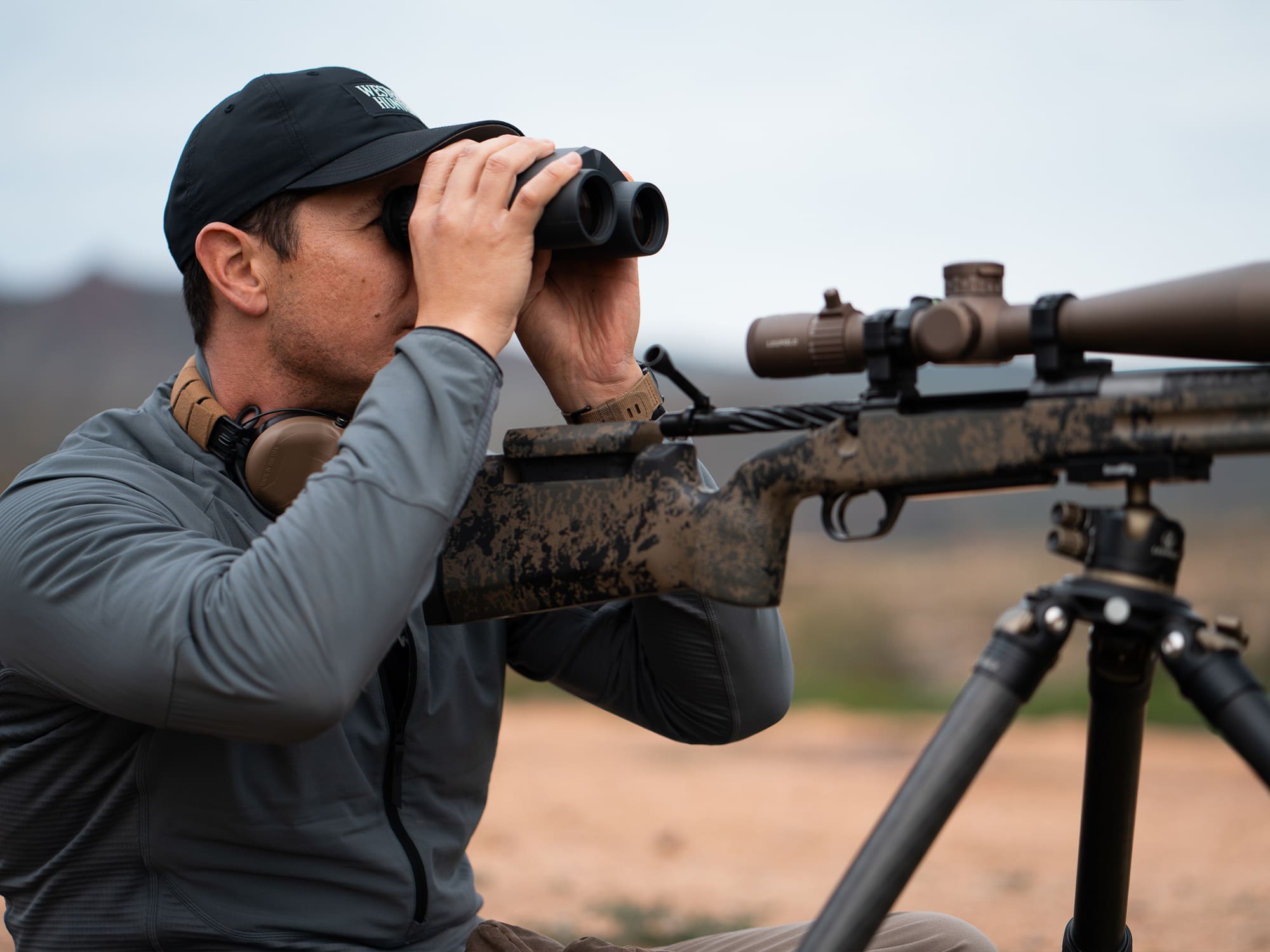
I’ve been obsessed lately with learning how to negotiate wind with long-range shots. It’s as much science as it is instinct, and from what I’ve gathered from many experts on the topic, it takes practice in both areas to reliably and consistently know what the appropriate wind hold is for a given situation. The BX-6 has buttons mounted on the left barrel of the binocular so you can change wind direction and speed on the fly.
How I’ve used this the most lately is to build an understanding of what a given wind speed and direction translates to with my bullet drop (elevation adjustment) and horizontal travel (windage). There’s a mind-numbing list of factors at play when accounting for wind at long distance. For the sake of this review, it’s sufficient to say that the windage input feature on the BX-6 is dual-purpose. The first is a great way to account for wind and give you an accurate solution. Secondly, it's a training tool to help build your understanding of how wind affects your bullet, ultimately strengthening your instincts, which can be the most critical default in a worst-case scenario.
For instance, on a Coues Deer hunt in Arizona, we had a 500-yard shot on a buck at the top of a mountain. It was a steep angle, and the buck was feeding in a direction where we’d lose him if we didn’t move quickly. We didn’t have much time. I got a solid range, but failed to input a roughly 6-MPH right-to-left wind. Our first shot was low, and the second was also low but just high enough to impact the buck in a good spot. After reviewing the situation, I ranged the stump the buck was next to, this time with the wind input into the binocular. The elevation adjustment it produced was .2 mils higher than without the wind, which was the difference in the miss on the first shot.
Under the Hood
There’s quite a lot loaded into the BX-6 Range HD, and not all of it I've gotten familiar with yet. For archery hunters, there is Precision Cut Archery software, which uses the ballistics of your arrow and bow, essentially in conjunction with its onboard sensors, to give you extremely accurate solutions in any environment (negating the need to change tapes for varying elevations).
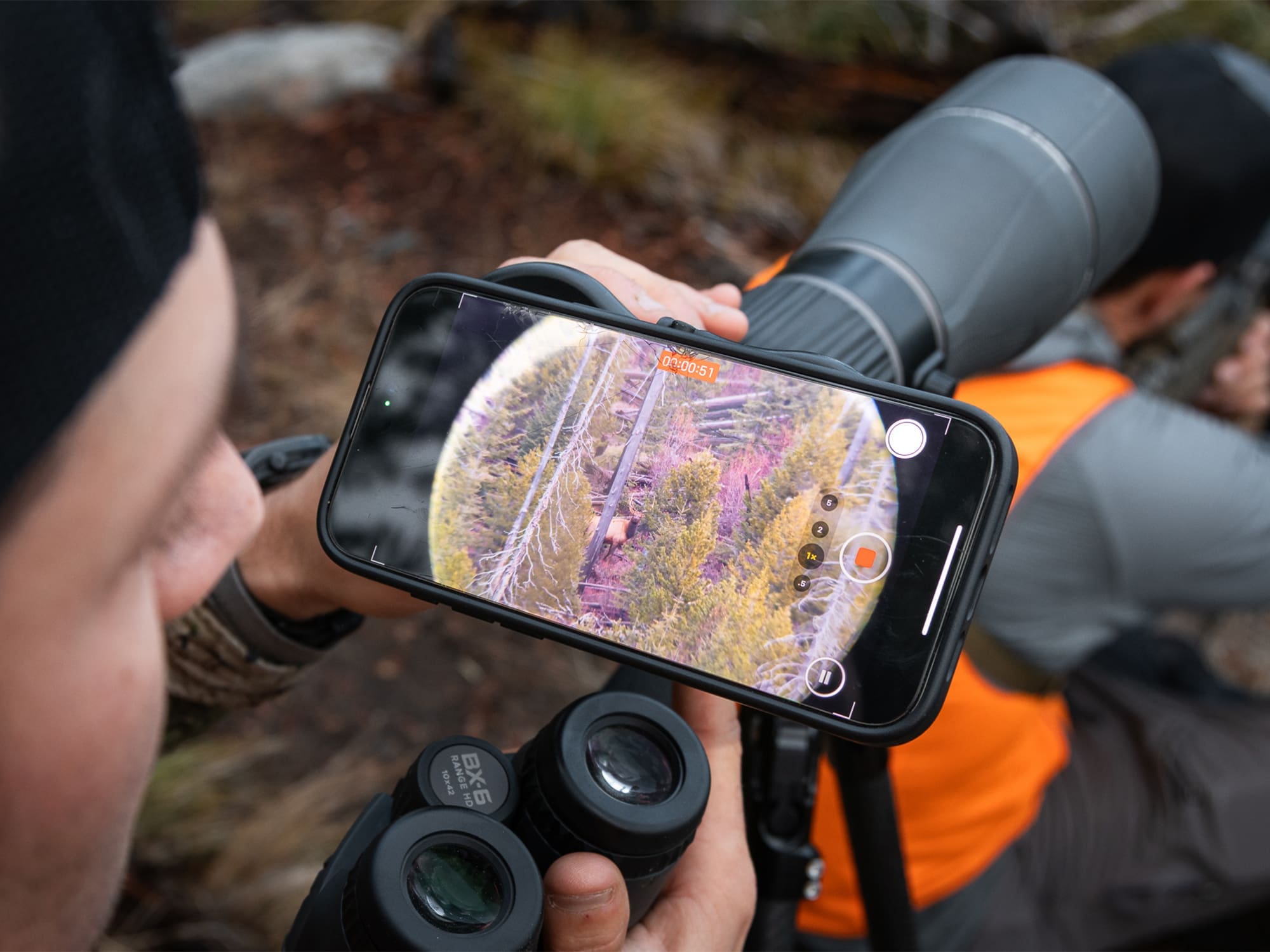
For match shooters or people who hunt in a variety of places, you can utilize Hornady’s 4DOF Zero Angle capability to avoid needing to re-zero before events. On top of all that, a highly accurate pinning feature allows you to mark locations in onX using integrated GPS tech and the laser of the binocular. The Pinning feature is one I got to take advantage of during an elk hunt in Montana, and I was very impressed with how accurately it marked my points. That feature alone has been a great tool for scouting, stalk planning, and recovery.
The Long and Short
There’s a lot more to know about Leupold's new BX-6 Range HD that I’ll leave to their product page to tell you. However, what I can share with you is this: So far, in three different states, this binocular has successfully ranged and helped kill four animals ranging from 130 yards to 500 yards. The hardware, app, and many features have been reliable and effortless to use. The optics are perhaps better than any other observation unit I’ve used from Leupold. And while I haven’t needed customer support or repairs, it's refreshing to know Leupold has a team at the ready in Beaverton, Oregon, to troubleshoot problems and even do repairs if needed.
I won’t have to send it off to Europe for 6-12 months to be repaired. With the start of the 2026 NRL Hunter season just around the corner, I’ll soon put these binoculars to the test on a “race track.” I’m entirely confident in how they’ll perform, but there’s no substitute for reps and a variety of conditions to build trust on.
This product from Leupold has been many years in the making, and in some eyes, it’s overdue. But in my opinion, when you set out to raise the bar and not just meet it, when you want to make something dynamic and powerful, something truly worth its weight, those are the things you take your time with. Get yourself a pair at Outdoorsmans.
Podcast with Leupold Team
Kevin also recorded a podcast with Collin Russell and Tim Lesser from Leupold about the BX-6 Range HD.