The Legend(s) of Bull Creek Camp
Often, big game hunters have special places where they return year after year to hunt with friends, celebrate hunts of the past, and plan for hunts in the future. Bull Creek Camp was such a place, deep in Idaho’s backcountry, where my hunting partners and I returned year after year for more than a decade to hunt elk and increase our knowledge about the area, its elk, their management, and the natural history of the area.
I had applied most of the research and planning techniques nearly 50 years ago that are available today to the modern backcountry hunter. The difference today is that most of this information is one click away on a computer. In those days, it had to be painstakingly found through various reports and research documents available from state and federal employees and publications.
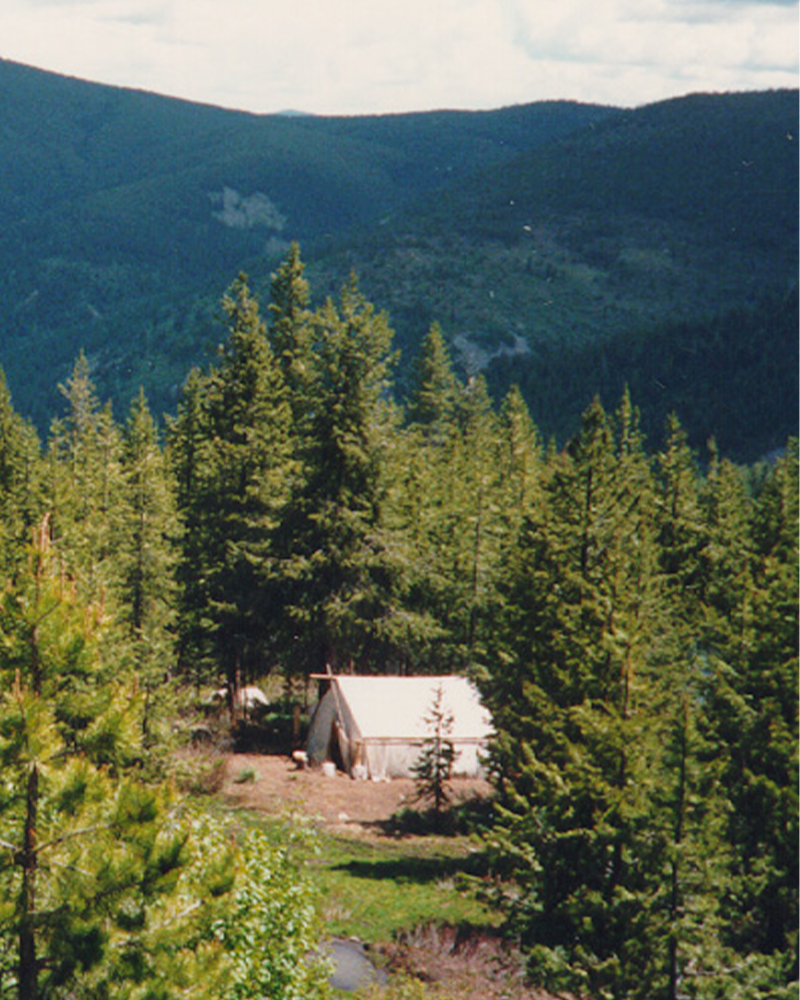
Water is the first consideration in locating a camp with stock. Bull Creek Camp was located along Bill Creek at the confluence of an unnamed creek coming from the hillside to the south. I learned there were beavers upstream of our campsite in Bill Creek, and the unnamed creek had plenty of clean, fresh water for us and our livestock. We named it Bull Creek, and thus, the campsite became “Bull Creek Camp.” The second consideration for a horse camp is feed. Bull Creek Camp had great horse feed with lots of grass. Other than the outfitter’s pack stock grazing permit, the area was essentially never grazed. The campsite, although overgrown when we found it, had been used many years before our arrival. This was evidenced by the amount of broken glass, beer cans, and rubble strewn everywhere under the grass and duff from prior use decades ago, before it was abandoned. After we had cleaned up the site and burned or buried all of the rubble, a perfectly located horse camp emerged.
My next and perhaps most important task, after our 1977 hunt, was to learn about the influences on the elk population that led to such a robust elk herd in the area. My goal was to determine if this was an area that would retain the robust elk herd I had found into the future. Elk habitat is the product of disturbance, thriving where fire has disturbed a forest. Large, intense wildfires had burned much of the forest in the area over several decades. The 1910 wildfire burned three million acres of land in just two days! That fire and fires in 1919 and 1934 burned the area’s conifers and everything in their path. With the forest canopy removed, the ashes soon sprouted lush greenery from horizon to horizon. The grasses, forbs, and vast brush fields of red-stem ceanothus, willow, and other brush species provided lush habitat for fat cow elk to give birth each June to more and more generations of healthy calves, which catapulted the fortunes of the herd.
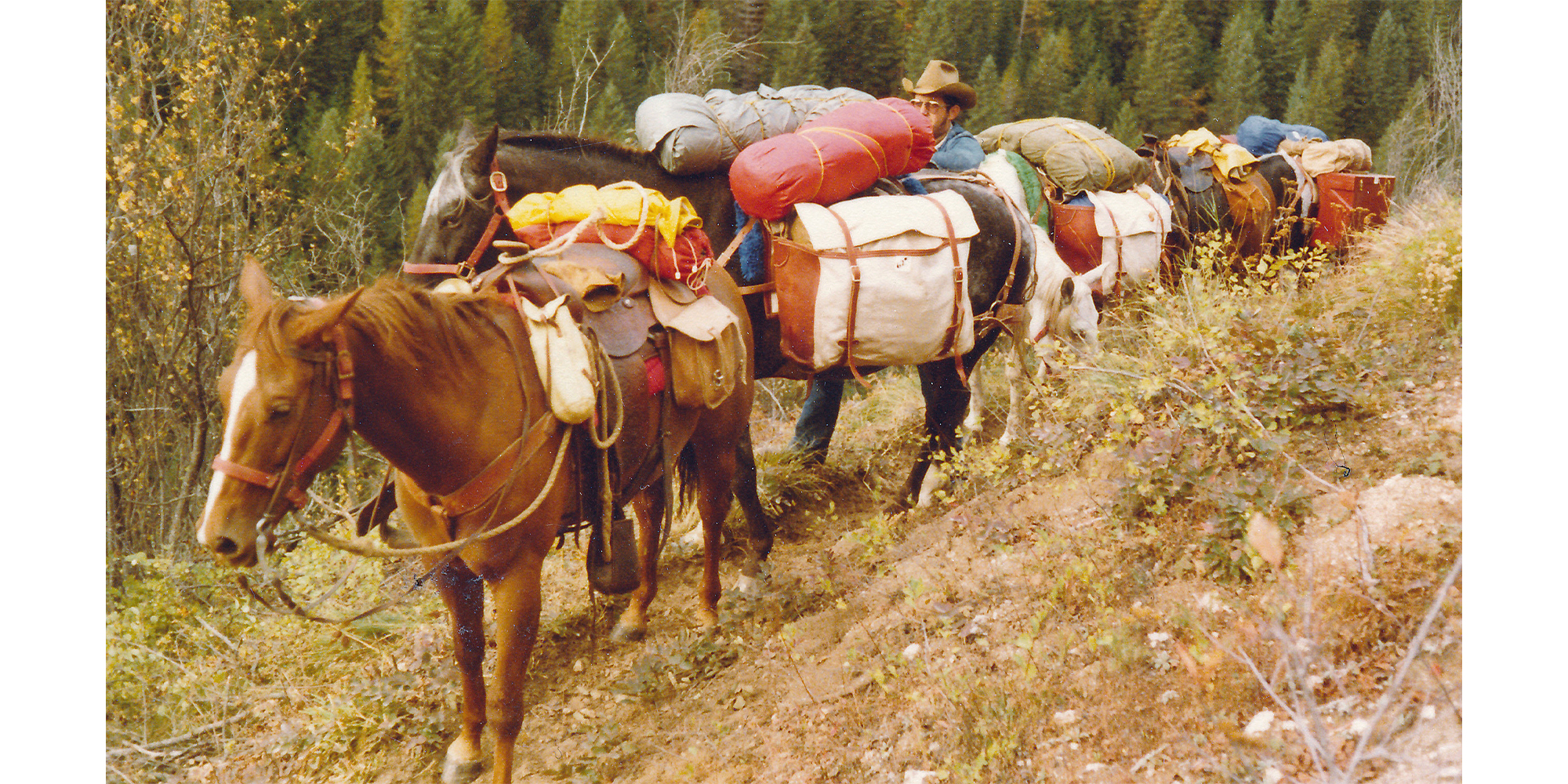
On one occasion, after a ten-mile pack in that involved a fairly serious horse wreck, we found some success. Bob killed his mature bull on the first day. I shot my bull across the canyon below camp that same day, and Andy got his bull the second day in the creek bottom below camp. We quartered our respective bulls and packed them back to camp over the next two days, hung them overnight, and packed out to the trailhead the following day. On the way out to the trailhead, a bull bugled in a drainage below us. Since Lowell, the new member of our hunting party, still had his tag, he dropped down the hillside below the USFS trail where he missed a 200-yard shot at the bull with his 30-06. After the shot, the bull disappeared in the heavy brush.
He continued to the bottom of the hillside, but the bull was nowhere to be found. His 70-year-old “Montanan” father had told him about calling an elk by blowing across the top of an empty cartridge, which made a whistle akin to an elk bugle. He pulled his spent 30-06 case from his pocket and blew across the top of it a few times. To his surprise, the bull bugled back at him and came running to him through the brush. This time his aim was true, and the bull was his.
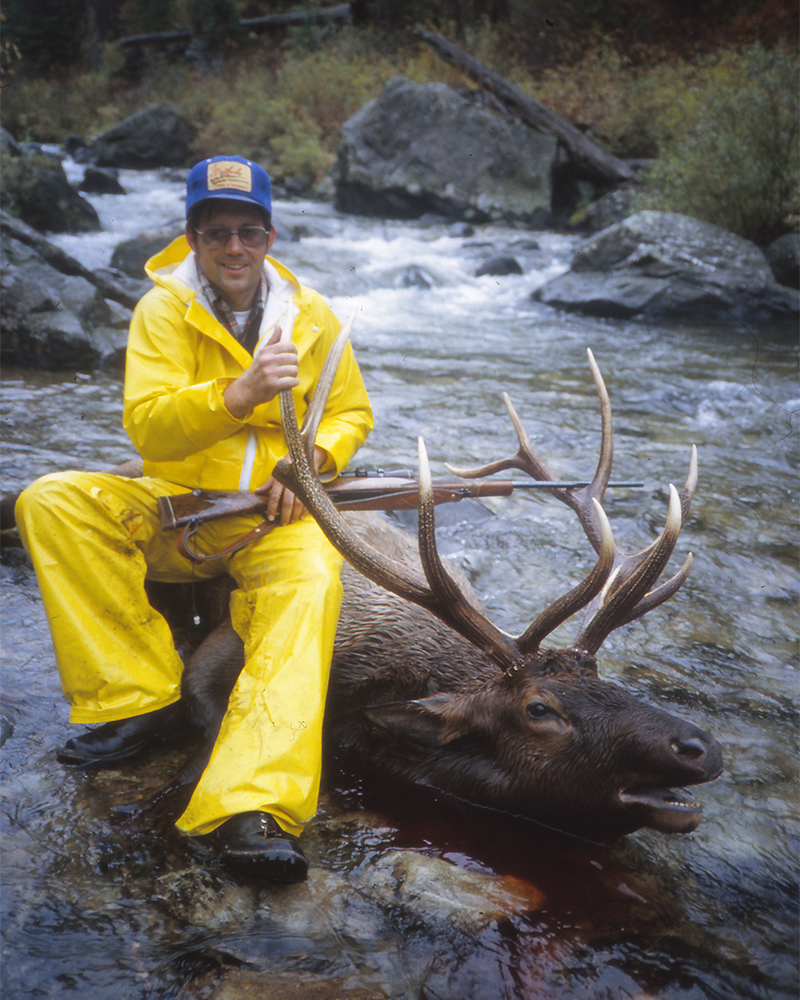
During the spring of 1979, I hired a new administrative assistant, and other than being a wonderfully competent person, her husband, Jere, was enrolled in the WSU veterinary school and was a skilled horseman. When I met him, I knew I had a potentially great new hunting and packing partner. I was still learning my horse packing skills, and over the next few years, we worked and learned together to become a great hunting “team.” Jere joined us for our fall 1979 hunt at Bull Creek Camp with my first four-horse “string.” In addition to Brandy, Ruffian and Smokey, I had added “Joe,” a stout quarter horse gelding.
With Jere on our team, the pack into camp went well, and by the first night, we were set up for our opening day hunt. It was a dry year, and the elk were not in their traditional places. We hunted hard for four days, and Bob was the only one who got his bull. It was a bull that was bugling from its bed on the opposite mountain thereafter called “Bull Mountain”. It had about 50 cows with it and would rise in its bed and bugle almost all day long. It sounded like one of the elk bugles made of coiled corrugated pipe and sounded like “Weeeeuuup.” Jere and I thought it was possibly a hunter bugling that often from the same location, but when Bob, an experienced elk hunter, heard it and decided to climb up and see if it was an elk. After an all-day climb through the brush-covered mountainside, Bob finally got to where he could see the bull in the timber nearly a thousand feet in elevation above our camp. He shot it while it was in its bed late in the afternoon. After quartering the bull and putting it in meat bags, he returned to camp, arriving the next morning in time for breakfast. The next day, it took Bob all day and the following night to get his horses to the kill site on Bull Mountain, retrieve the bull, and return to camp from the kill site through thick brush, rock cliffs, and eventually thick lodgepole thickets.
Elk hunters are sometimes so intent upon not quitting that they ignore health situations. I was so intent on getting a bull that Bob and Andy had spotted on the way to camp that I decided to return to camp when we got halfway to the trailhead, as the pain in my side had subsided. The pain was tolerable through the night, and I killed the bull close to camp shortly after daylight. Jere heard me shoot and helped work up the bull and pack it to camp. He killed a bull of his own that afternoon, and we were packed and ready to go to the trailhead and the hospital the next day. The pack-out went well, and at the trailhead, it was pouring rain as we finished our dinner.
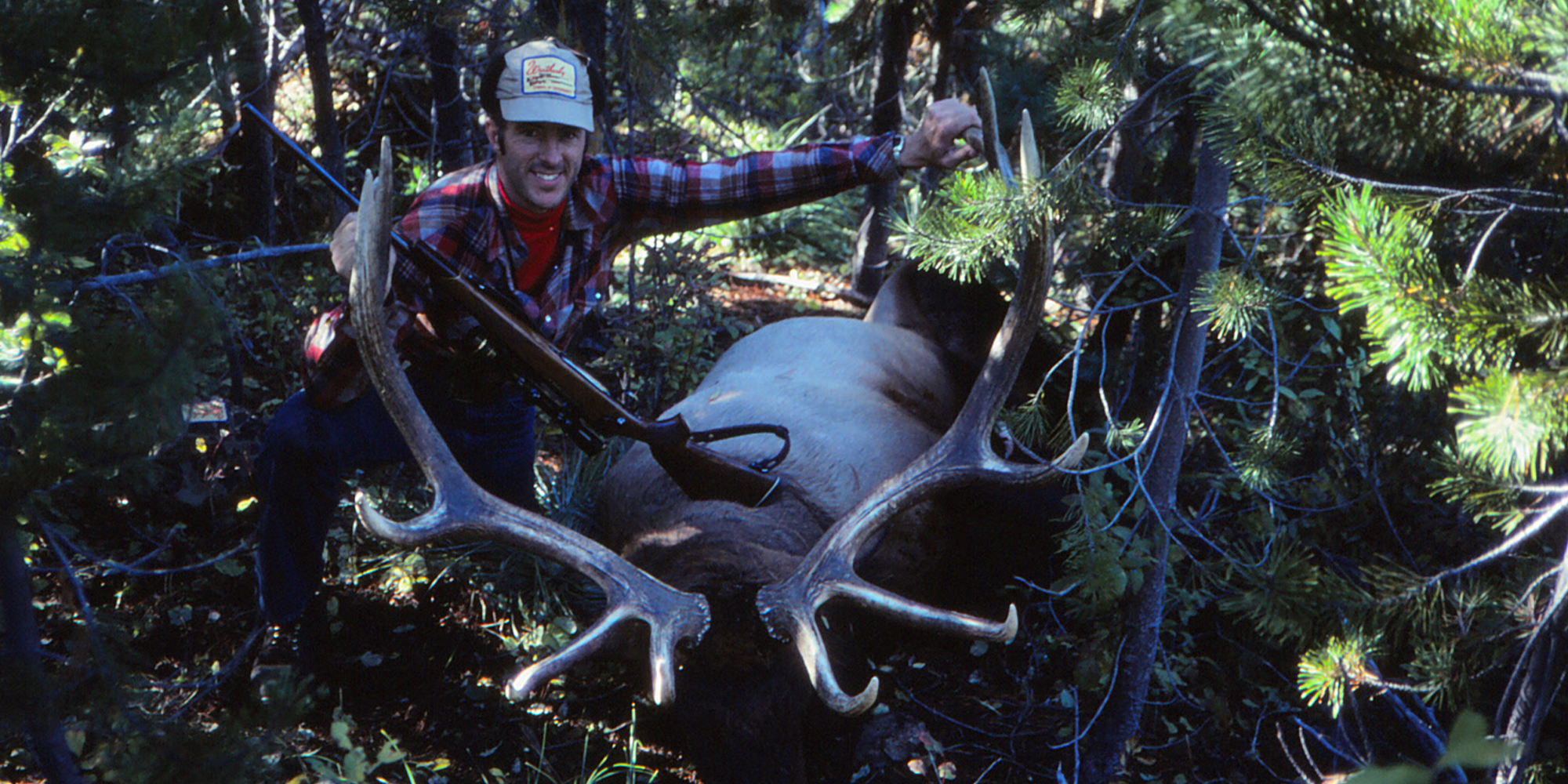
I was feeling pretty well, so when two very close friends showed up at our camp and asked if I would pack their bulls off the adjacent mountain with my horses, I agreed to do so, depending on how I felt. The pain in my side was a “dull ache” the next morning, so we saddled up my stock and went up the adjacent USFS trail to where their boned-out meat was hung. They loaded my horses with their meat, and we returned down the mountain to our road camp. After we reached the trailhead, Jerre and I returned home. I went to the hospital, and it wasn’t until nearly a month later that my appendix burst and I had emergency surgery. It had apparently “walled itself off,” and I was one very lucky elk hunter.
The next three years were excellent elk hunting from Bull Creek Camp, but more and more hunting pressure was coming from the Shot Creek Outfitters camp. To avoid the new pressure, we focused our hunting efforts on Bull Mountain west of our camp, where Bob had killed his “Weeeeuuup Bull.” Jere and I both killed our largest bulls during this time period, and Bob and Andy were just as successful, after moving a spike camp down into the creek, two miles west of our camp at the base of Bull Mountain.
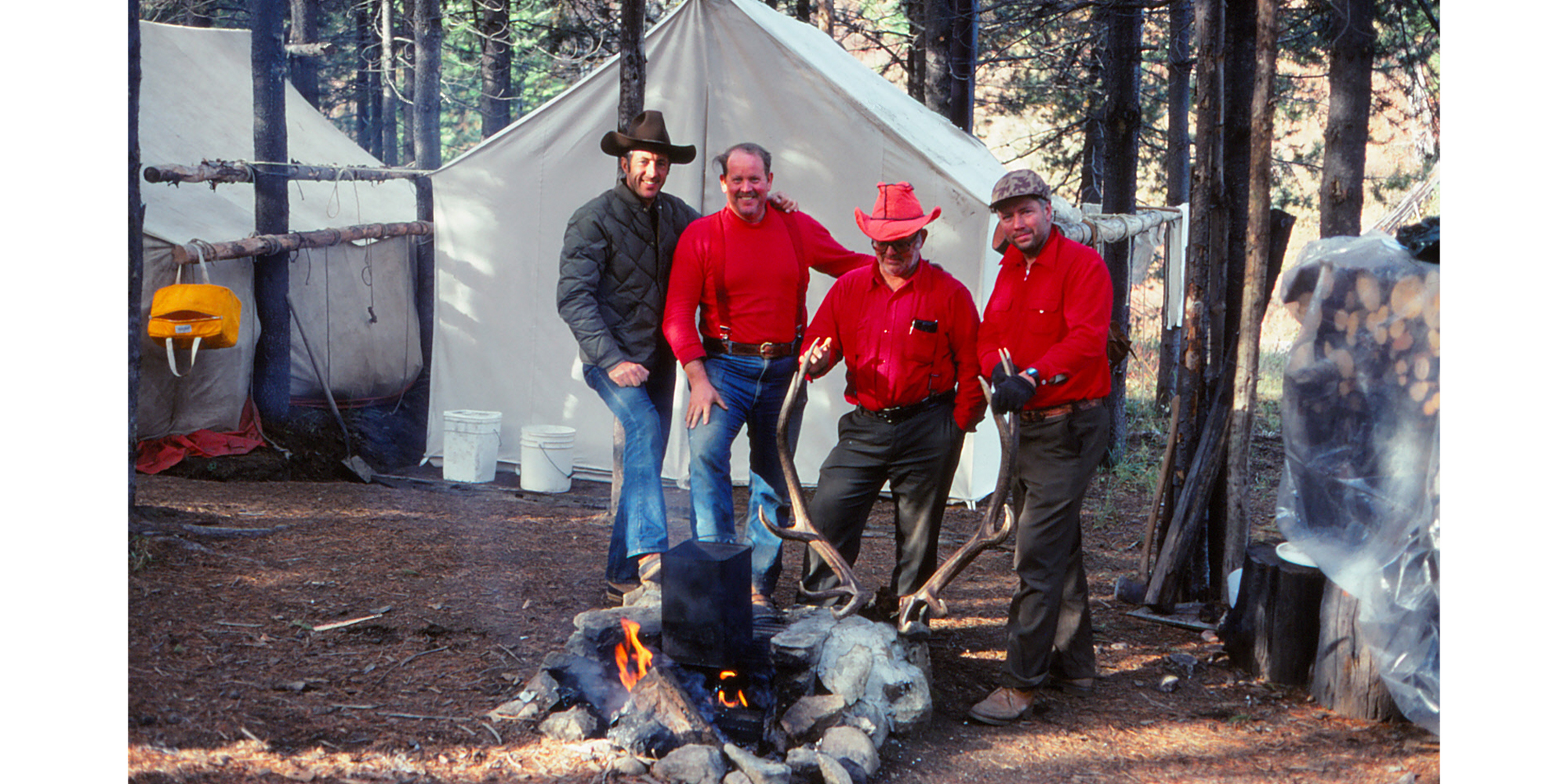
If we weren’t successful on opening day, Bob and Andy would hunt from the spike camp, and Jere and I would access Bull Mountain from the ridge north of the spike camp, where we would tie our horses before dropping down to the creek a thousand feet below us and hunting the bulls we had spotted on Bull Mountain. We used to say, “Every day the circle gets wider!”